
Diamond Flap Discs vs Diamond Belts: Stone, Glass, Ceramic
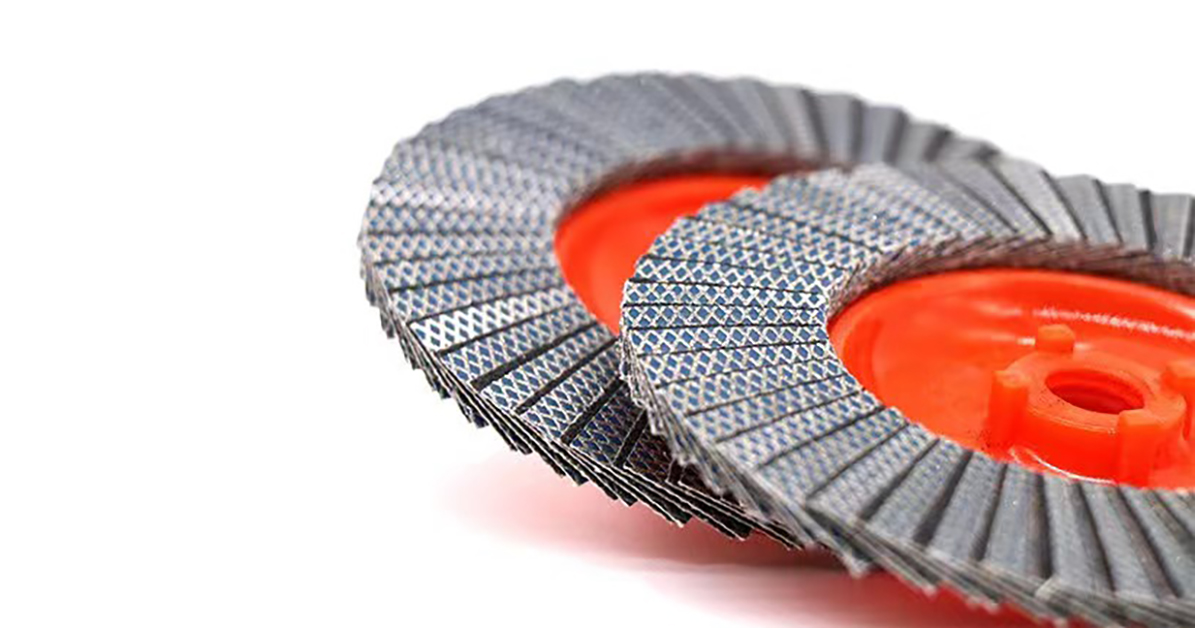
The first decision is not which diamond abrasive is better in general. It is which tool format can reach the surface, hold the required contact shape, and run on the machine already in the shop. Diamond flap discs and diamond belts both address hard brittle materials, but they fit different geometry and production problems.
This guide compares the two formats for stone, glass, ceramic and related materials such as monocrystalline silicon, cemented carbide and sprayed coatings. It uses RUITE product and supply data to show where each format fits. RUITE is the brand of Zhengzhou Ruite Diamond Belts Co., Ltd., a Zhengzhou-based manufacturer established in 2003 that supplies both diamond flap discs and diamond belts.
The real buying problem: geometry before abrasive type
Hard brittle materials do not bend or absorb impact the way ductile metals do. A poorly matched tool can chip an edge, create a deeper scratch pattern than expected, or generate heat at the contact point. That is why a simple disc-versus-belt price comparison is not enough. The buyer needs to know where the abrasive must act, how large the contact area should be, and whether the machine can present the tool to the workpiece without forcing the operator to work at an awkward angle.
A flat tile edge, a beveled marble edge and a curved glass section are three different access problems. A diamond flap disc is a disc-format tool with an arbor hole; it is used on handheld electric tools and grinders. A diamond belt is a belt-format tool supplied in a range of widths and lengths. The format determines reach, contact shape and the amount of setup work. The material and grit then determine how the surface is cut and finished.
The practical question is therefore: can the workpiece be presented safely and consistently to a rotating disc, or does the contact line need to follow a complex shape or surface that a disc cannot reach? That question should be answered before comparing supplier quotations.
Industry background: where diamond abrasives fit
RUITE's diamond flap disc product data lists stone, glass, ceramics, monocrystalline silicon, cemented carbide and sprayed coatings as materials for dry and wet grinding. The same data lists glass, stone, thermal spray coating, wind power, porcelain, and aeronautics and astronautics among the applicable industries. These are demanding materials because they are hard and brittle, and because surface damage can be difficult to remove later in the process.
Diamond belts overlap with that material set. RUITE's company profile states that diamond belts are widely used in grinding and polishing processes for complex shapes and surfaces of hard brittle materials, including stone, glass, ceramic, monocrystalline silicon, synthetic materials and hard materials. The overlap is important for buyers: a stone shop, glass processor or ceramic manufacturer may need both formats in the same production cell, but for different operations.
For EU buyers, EN 13743:2017 is a relevant safety standard for coated abrasive products, including requirements for safety markings and maximum operating speeds. RUITE's application record for diamond flap discs lists EN 13743:2017 as a special requirement. Buyers should still obtain the current certificate or declaration and check that its scope covers the exact product, size and marking they intend to use.
The short answer: disc for access, belt for profile
Choose a diamond flap disc when the workpiece has an accessible flat surface, edge, bevel, chamfer or surface-conditioning area that a rotating disc can reach. Choose a diamond belt when the contact line must follow a complex shape or surface, and when the machine can carry a belt of the required width and length. Neither format is automatically more precise. Precision comes from matching the abrasive to the material, using the right grit sequence, maintaining the machine, and controlling the operator's presentation of the tool.
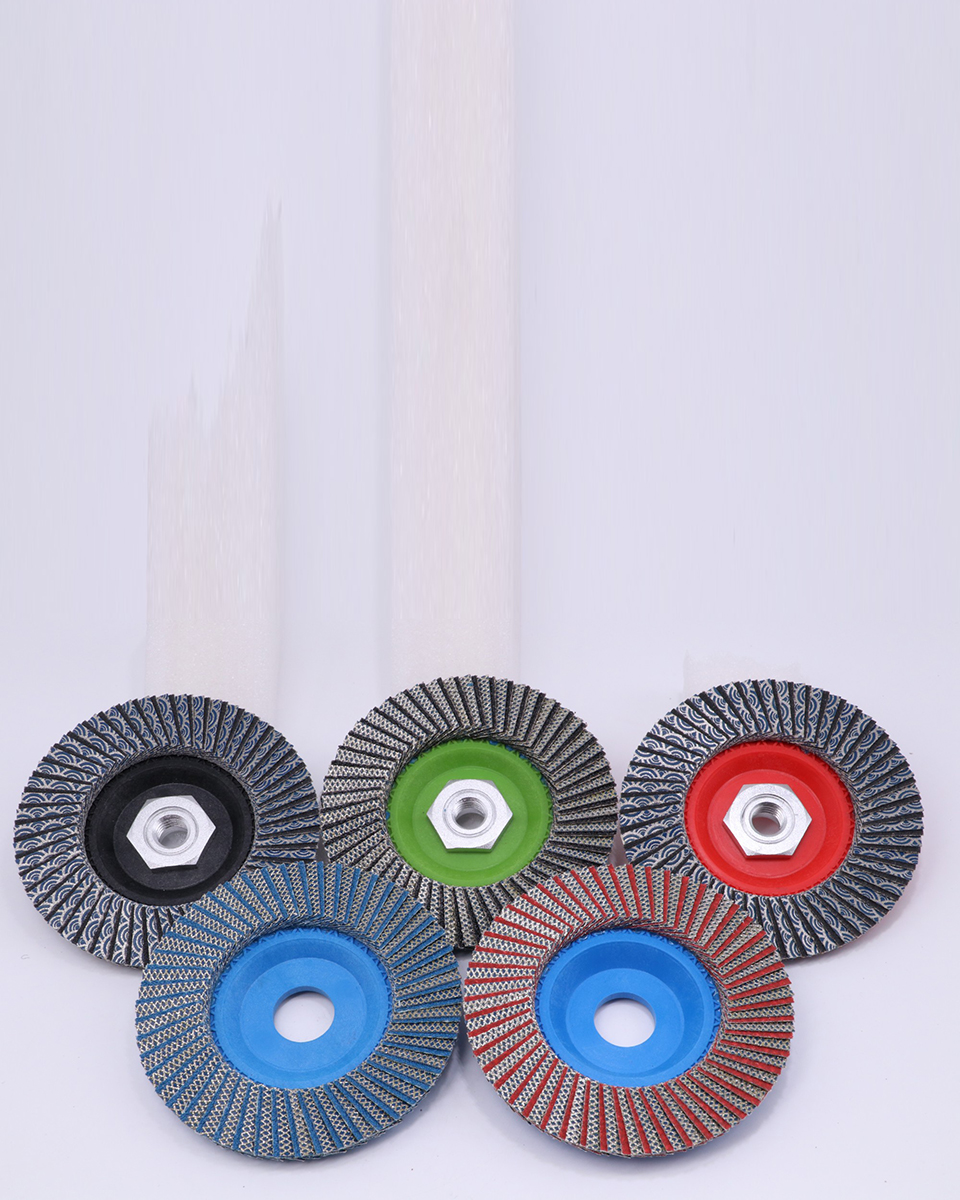
RUITE's diamond flap disc range is listed in diameters of 100 × 16 mm, 115 × 22 mm and 125 × 22 mm, with grits from 40# to 800#. The product data states that the discs are suitable for dry and wet grinding, and describes high cutting speed and long working life as product features. RUITE's diamond belts are listed in widths from 5 mm to 350 mm and lengths from 150 mm to 5000 mm. Those dimensions are the first screening fields for a project, because a belt that does not match the machine or contact width cannot be evaluated fairly against a disc.
Diamond flap disc: where the format fits
A diamond flap disc is useful when the operator needs a compact, rotating contact area on an accessible part. The disc can be presented to a flat edge, a chamfer or a bevel, and the grit can be selected from the 40# to 800# range to move from shaping toward finer finishing. RUITE's product description lists high cutting speed and long working life, and the data allows both dry and wet grinding.
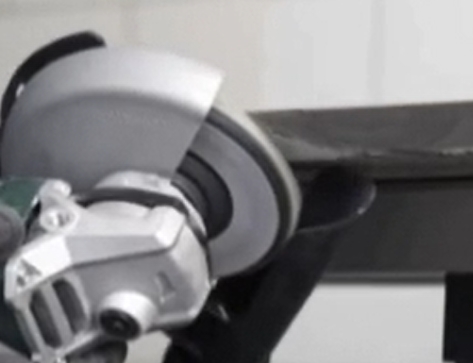
Typical fit areas include edge grinding, beveling and chamfering, surface conditioning, and aggressive material removal when a coarse grit is appropriate. For ceramic tile, marble, stone and glass, the disc format is usually the simpler choice when the work area is open and the edge is straight or gently contoured. The operator can control the contact patch by tilting the disc, but that also means the result depends on technique. A sample test should confirm the starting grit and the pressure that gives an acceptable edge without chipping.
The limits are equally important. A disc may not reach a deep internal profile, a tight curved surface or a long molded section without leaving a faceted contact pattern. It also requires the correct arbor size and a machine speed within the product's approved limit. For EU work, the maximum speed marked on the disc must be checked against the grinder and the applicable safety requirement.
Diamond belt: where the format fits
A diamond belt is supplied as a belt with a specified width and length. RUITE lists widths from 5 mm to 350 mm and lengths from 150 mm to 5000 mm. The company profile states that diamond belts are widely used for grinding and polishing complex shapes and surfaces of hard brittle materials, including stone, glass, ceramic, monocrystalline silicon, synthetic materials and hard materials. That makes the belt format relevant when the contact line must follow a profile rather than sit flat against a disc.
The belt width affects the contact patch, and the belt length must match the machine's path and adjustment range. A narrow belt can be useful for local profile work, while a wider belt covers more area per pass. These are geometry and machine-fit considerations, not proof that one width will produce a better finish on every material. The buyer should confirm the belt path, tensioning method, dry or wet operating conditions, and maximum speed with the supplier before ordering.
The belt format also has limits. It requires a compatible machine and a stable belt path. If the workpiece is a simple flat edge and a suitable grinder is already available, a disc may involve less setup. The supplied RUITE data for diamond belts does not state a dry or wet recommendation for each belt construction, so that point must be confirmed for the specific project rather than assumed from the disc data.
Comparison table: matching format to project needs
| Decision factor | Diamond flap disc | Diamond belt | What to confirm |
|---|---|---|---|
| Workpiece geometry | Accessible flat surfaces, edges, bevels, chamfers and surface conditioning | Complex shapes and surfaces that need a belt contact line | Can the tool reach the area without forcing the operator or machine? |
| RUITE size data | 100 × 16 mm, 115 × 22 mm and 125 × 22 mm; grit 40# to 800# | Width 5 mm to 350 mm; length 150 mm to 5000 mm | Arbor size, belt path, machine speed and contact width |
| Materials in supplied data | Stone, glass, ceramics, monocrystalline silicon, cemented carbide and sprayed coatings; dry and wet grinding | Stone, glass, ceramic, monocrystalline silicon, synthetic materials and hard materials | Specific grade, binder, coating and target finish |
| Process role | High cutting speed and long working life are listed product features | Grinding and polishing complex shapes and surfaces | Sample result on the actual workpiece, not only catalog wording |
| Machine interface | Handheld electric tools and grinders; check arbor and maximum speed | Match belt width and length to the machine; confirm operating mode | Safety marking and machine compatibility |
| Procurement step | Confirm grit sequence, backing, size and test method | Confirm belt construction, joint or loop condition and test method | Request a sample and a current quotation |
Step-by-step selection for stone, glass and ceramic projects
1. Map the workpiece geometry
Mark the areas that need grinding: flat edge, bevel, chamfer, surface, internal curve, external profile or mixed transition. If the area is open and flat, a disc is the first candidate. If the contact line follows a complex shape or a long curved surface, a belt is the first candidate. If both can reach, keep both in the sample comparison.
2. Check the machine and safety limits
For a disc, confirm the arbor size, the grinder speed and the maximum speed marked on the product. For a belt, confirm the required width, length and belt path. For EU projects, check EN 13743:2017 markings and the declared maximum operating speed before use. A tool that is mechanically incompatible should be removed from the comparison regardless of its abrasive specification.
3. Match the material and operation
RUITE's diamond flap disc data covers stone, glass, ceramics, monocrystalline silicon, cemented carbide and sprayed coatings. The belt profile covers stone, glass, ceramic, monocrystalline silicon, synthetic materials and hard materials. For tile, marble or engineered stone, confirm the specific material in the sample because these are broad categories with different mineral content and binders. For monocrystalline silicon and cemented carbide, confirm the finish requirement and whether dry or wet operation is preferred for the actual process.
4. Set a grit sequence
RUITE's diamond flap disc range runs from 40# to 800#. A coarse grit is normally used to remove material or establish a shape, and finer grits are used to reduce the scratch pattern. One supplier's published guidance maps 60 grit to aggressive shaping, 120 grit to grinding and beveling, and 200 grit to final smoothing, but that is product-specific guidance rather than a universal rule. The correct sequence depends on the starting surface, the target finish and the amount of material to be removed.
5. Run a sample on the same material
Use scrap from the same stone, glass or ceramic batch. Record the tool format, grit, machine speed, dry or wet condition, contact pressure and time. Check edge chipping, scratch depth, heat, belt tracking and disc wear. RUITE's product record describes high cutting speed and long working life, but it does not provide a controlled percentage for removal rate, tool life, maintenance cost or price against traditional abrasives. The sample is therefore the relevant evidence for the buyer's own process.
6. Confirm supply terms before scaling
RUITE's supply record states OEM production with packing and logo customization, a monthly capacity of 10,000 units, a 50-unit MOQ and a 30-day lead time. Quality control is listed as 100% testing. After-sales terms include a 12-month shelf life quality warranty, free technical consultation and replacement for defective batches. These terms should be written into the purchase order and checked against the selected sizes and grits.
Use cases: matching the format to the material
Ceramic tile and porcelain
For flat tile edges and simple bevels, a diamond flap disc is usually the more direct setup because the disc can be presented to the edge with a handheld grinder. For sculpted ceramic, curved sections or complex profiles, a diamond belt may fit the contact line better. In both cases, confirm the specific ceramic body and glaze behavior on a sample, because chipping can occur at the exit edge if the grit or pressure is wrong.
Marble, stone and engineered stone
Marble and stone edge work often suits a disc for beveling, chamfering and surface conditioning on accessible areas. A belt can be considered when the workpiece has a molded or curved surface that a disc cannot follow consistently. Engineered stone should be treated as its own material specification: confirm the mineral content and binder with the supplier and test the chosen format before setting a production grit sequence.
Glass
Flat glass edges and accessible surfaces can be processed with a diamond flap disc in dry or wet mode, subject to the product and machine limits. Curved glass or complex glass shapes may require a belt if the contact line must follow the profile. Edge quality should be checked for chips and scratch pattern under the shop's normal inspection method.
Monocrystalline silicon and cemented carbide
RUITE's diamond flap disc data includes monocrystalline silicon and cemented carbide, also called hard metal. The belt profile also includes monocrystalline silicon. For these materials, the format decision should follow access and finish requirements: use the disc where a small rotating contact area can reach the surface, and use the belt where the contact must follow a complex or curved shape. Confirm the required surface finish and machine compatibility before ordering.
Sprayed and thermal-spray coatings
RUITE's diamond flap disc data lists sprayed coatings, and the applicable industries include thermal spray coating. A disc format is relevant when the coating is accessible and can be presented to the rotating tool. The supplied belt profile does not list sprayed coatings, so a belt should not be assumed suitable for that application without a specific supplier confirmation and sample test.
What the product claim does and does not establish
Production and supply fit with RUITE
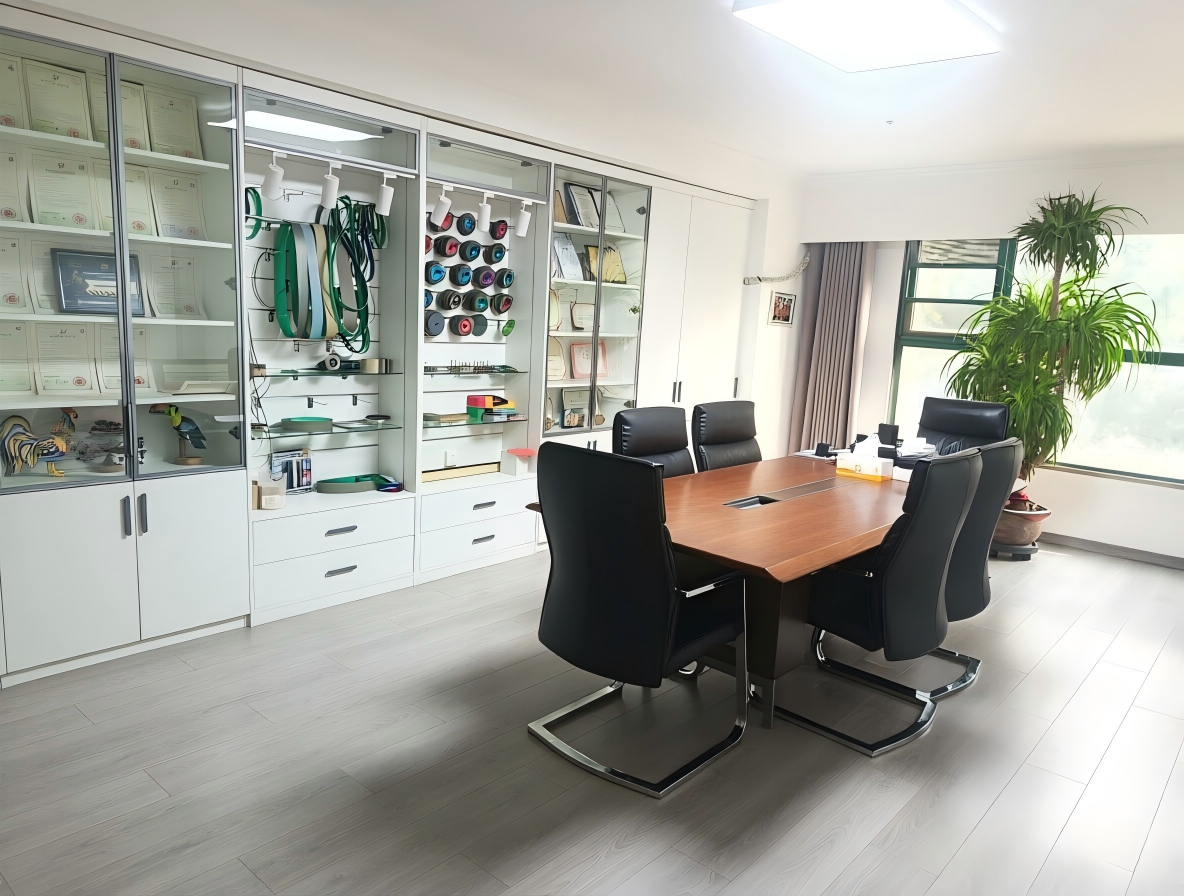
RUITE reports 45 employees, a 500 m² factory, a 5-engineer R&D team, a 70% export ratio and main markets in the EU and USA. Its product portfolio includes diamond belts, diamond flap discs, diamond flap wheels, diamond velcro discs, diamond hand pads and diamond quick change discs. For a project buyer, the relevant question is whether the supplier can hold the selected format, size and grit consistently across repeat orders.
The capacity record lists a monthly capacity of 10,000 units, OEM packing and logo customization, a 50-unit MOQ and a 30-day lead time. Quality control is stated as 100% testing. The after-sales terms list a 12-month shelf life quality warranty, free technical consultation and replacement for defective batches. RUITE's case record describes an OEM ceramic-grinding customer in Italy, with 20,000 units over an 8-year relationship, stable quality and no customer complaints. That is a company-recorded case, not an independent audit, but it is useful as a reference point for the type of repeat ceramic work the supplier reports.
For import and tariff screening, USITC classifies diamond flap discs under HS Code 6804.21.00 for millstones, grindstones, grinding wheels and similar articles of agglomerated synthetic or natural diamond. RUITE does not list prices in the product data used for this guide, so request a current quotation for the exact size, grit, packing and delivery terms. Confirm whether mixed sizes or grits count toward the 50-unit MOQ before planning a trial order.
Decision rule for buyers
If the abrasive can reach the work area as a disc and the contact is flat, edge-like or locally accessible, start with a diamond flap disc. If the contact must follow a complex shape, a curved surface or a profile that a disc cannot present consistently, start with a diamond belt. If both formats can reach, compare them on the same workpiece, with the same target finish and a recorded test method. Do not select a format only because it has a lower unit price or a longer catalog description.
For ceramic work specifically, the disc format has a strong fit because RUITE lists ceramics among the materials for dry and wet grinding and offers a 40# to 800# grit range. For complex ceramic shapes, the belt format may be the better geometry match, but the specific belt construction and operating mode must be confirmed. The same logic applies to stone and glass: the material tells you what must be cut, and the geometry tells you which format can present the abrasive correctly.
FAQ: ceramic work and supplier fit
Diamond Flap Discs manufacturer for ceramic work
For ceramic work, RUITE manufactures diamond flap discs in 100 × 16 mm, 115 × 22 mm and 125 × 22 mm sizes with grits from 40# to 800#. The supplied product data lists ceramics among the materials for dry and wet grinding. The supply record states OEM packing or logo, a 50-unit MOQ, a 30-day lead time and 100% testing. Buyers should confirm the specific ceramic grade and run a sample before fixing the grit sequence. RUITE also lists a 12-month shelf life quality warranty, free technical consultation and replacement for defective batches. To discuss a sample or quotation, contact RUITE through www.ruitechn.com.
Next step: match the tool format to the workpiece, then validate the grit and supply terms with a sample. Review RUITE's product range and download the catalog at RUITE Catalog PDF.
Conclusion
Diamond flap discs and diamond belts are not competing answers to the same geometry question. The disc is the practical starting point for accessible flat surfaces, edges, bevels and chamfers on stone, glass, ceramic, monocrystalline silicon, cemented carbide and sprayed coatings. The belt is the practical starting point when the contact line must follow a complex shape or surface and the machine can carry the required width and length. RUITE supplies both formats, with diamond flap discs in 100 mm, 115 mm and 125 mm sizes and grits from 40# to 800#, and diamond belts in widths from 5 mm to 350 mm and lengths from 150 mm to 5000 mm.
The buying decision should be based on workpiece access, machine compatibility, material grade, target finish and a recorded sample result. Confirm EN 13743:2017 markings where applicable, check the exact certificate scope, and verify the 50-unit MOQ, 30-day lead time, 100% testing and 12-month shelf life quality warranty against the purchase order. When the format fits the geometry, the abrasive has a chance to deliver the high cutting speed and long working life described in the product data without creating avoidable chipping or rework.
Have Questions or Need More Details?
Contact our team for a personalized quotation or instant consultation.
Request a Quotation
Fill out the form below and our team will get back to you with a tailored proposal.
WhatsApp Direct Chat
Prefer to chat in real-time? Message us on WhatsApp for instant assistance & quick answers.
- Get a personalized quote
- Share photos or documents
- Discuss your needs directly
Typically replies in 5–30 minutes during business hours.