
Diamond Flap Discs vs. Traditional Flap Discs: A Head-to-Head Cost Analysis for Stone

Short answer: On stone, a diamond flap disc is normally the lower-cost consumable per unit of finished work, even though it costs more per disc. Diamond flap discs grind faster and last longer than traditional abrasive flap discs, and they require less maintenance. RUITE reports a 45% grinding-efficiency advantage over conventional abrasives, together with a longer service life and lower maintenance demand — which is why a diamond flap disc is described as more cost-effective in the long run despite its higher purchase price.
This article is written for the people who pay the consumables bill in a stone business: fabricators, countertop shops, marble and granite processors, masonry contractors, and the importers and distributors who stock grinding discs for them. It explains why a price-per-disc comparison gives the wrong answer on stone, what actually changes when a shop switches to diamond, and how to run a head-to-head cost analysis using your own numbers rather than someone else’s rule of thumb.
The Problem: Unit Price Is the Wrong Metric for Stone Grinding
A consumables quotation usually contains one comparison that everybody can read immediately: price per disc. Judged that way, a traditional abrasive flap disc always wins, because a diamond flap disc is genuinely more expensive to buy. That difference is real and it should not be hidden.
The difficulty is that a disc is not the unit of consumption in a stone shop. The unit that reaches the customer is a finished edge, a blended seam, a levelled surface, a completed cut-out. Every one of those units carries four costs: the discs consumed to produce it, the labour spent changing discs, the downtime of the grinder and the operator, and the stone, time and labour lost to rework.
A cheaper disc pushes all four of those costs up when it wears quickly on hard, brittle material. The shop buys more discs, stops more often to replace them, and produces a less consistent result because a fresh disc and a worn disc behave differently on the same edge. Diamond flap discs were designed around exactly that problem: they are built for hard and brittle materials, they hold their cutting performance for longer, and they require less maintenance — so they act on the four cost lines instead of on the per-disc price line.
The procurement question is therefore not “which disc is cheaper” but “which disc is cheaper per finished unit, and how do we prove it before committing to a volume order.”
Industry Background: Superhard Abrasives in a Growing Diamond Tool Market
Diamond tooling is a large and expanding category. Industry projections place the global diamond tools market at approximately USD 9.1 billion by 2026, and commercial research on abrasives reports that Asia-Pacific accounted for 55.40% of global abrasives purchases in 2025 — a concentration that explains why so much diamond flap disc supply is sourced from Chinese manufacturers.
For trade and classification purposes, diamond flap discs fall under HS Code 6804.21.00 in the US Harmonized Tariff Schedule: millstones, grindstones, grinding wheels and the like, of agglomerated synthetic or natural diamond. For buyers selling into the European Union, any coated abrasive product placed on the EU market — diamond flap discs included — must comply with EN 13743:2017 regarding safety markings and maximum operating speeds.
The manufacturer behind this analysis is Zhengzhou Ruite Diamond Belts Co., Ltd. (RUITE), a Chinese producer of superhard coated abrasives based in Zhengzhou, Henan, and established in 2003. RUITE makes diamond belts, diamond flap discs, diamond flap wheels, diamond velcro discs, diamond hand pads and diamond quick change discs. The company states a 500 m² factory, 45 employees, a five-engineer research and development team and an annual output of 100,000 units, with roughly 70% of production exported to the EU and USA. Within its diamond flap disc range, RUITE specifies diameters of 100 mm, 115 mm and 125 mm with grits from 40# to 800#.
That background matters to the cost question for two reasons. First, superhard coated abrasives combine the flexibility of traditional coated abrasives with the hardness of diamond, which is precisely what allows them to hold a cutting edge on stone long enough to change the cost arithmetic. Second, in regulated markets the ability to document specifications and compliance is part of the cost: a disc that cannot legally be placed on the market has no cost per use at all.
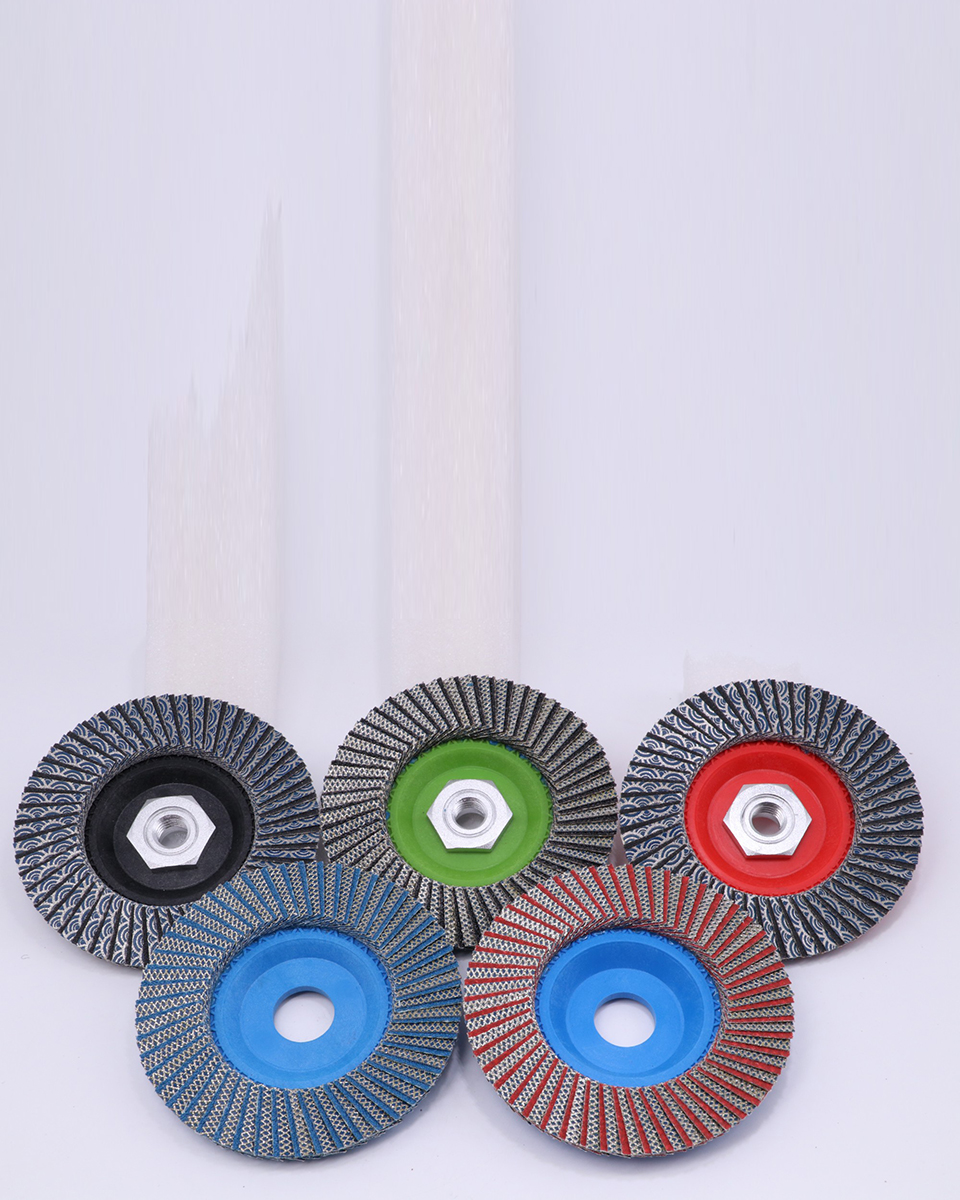
Diamond Flap Discs vs. Traditional Flap Discs: What Actually Changes on Stone
The difference between the two disc types is not one specification. It is a set of five commercial effects that appear in the same shop, on the same grinder, during the same shift.
1. Grinding efficiency: fewer passes per edge
RUITE reports that diamond flap discs deliver 45% higher grinding efficiency than traditional abrasives. For a stone shop the practical meaning is straightforward: each pass removes more material and reaches the target shape or finish in less time. In fabrication, grinding time is labour time, and labour is normally the largest line item in a finishing operation — which is why an efficiency gain moves the cost per finished unit far more than a discount on the disc itself.
2. Service life: lower disc consumption per finished unit
Diamond flap discs are described as more durable than abrasive flap discs and as having a longer service life. On stone, that shows up as a lower consumption rate per square metre of surface or per linear metre of edge. A higher unit price only becomes a higher total cost if consumption is identical — and the entire purpose of a superhard abrasive is that consumption is not identical.
3. Maintenance and changeover: fewer unplanned stops
Traditional abrasive flap discs require more frequent replacement, and every replacement consumes grinding time, operator attention and consistency. Diamond flap discs have lower maintenance requirements, which reduces the number of interruptions per shift and keeps the disc closer to its design performance for a larger share of its working life.
4. Price per disc: the honest part of the comparison
The purchase price of a diamond flap disc is higher than that of a traditional abrasive flap disc. That is not a marketing gap; it is the direct consequence of using superhard diamond abrasive. Buyers who expect a diamond disc to compete on price per unit are comparing the wrong number, and suppliers who conceal that difference create a procurement problem rather than solving one.
5. Cost in the long run: why the premium is recovered
Combining the four effects produces the statement that decides the purchase: although the price is higher, the diamond flap disc is more durable and has a longer service life, which makes it more cost-effective in the long run. That conclusion is a statement about the cost profile on hard, brittle, high-volume stone work — not a universal law that applies to every grinding task.
Where the cost advantage should not be assumed
Decision boundaries matter as much as advantages. Diamond flap discs are specified for high-precision processing of hard and brittle materials, and the cost case is strongest where the work is repetitive, the material is hard and the finish standard is demanding. Where a shop’s workload profile, throughput or finish requirement differs from that, the arithmetic should be re-run rather than assumed. The second honest limitation is data: disc prices, labour rates, downtime costs and stone costs vary by market and by buyer, so no external rule of thumb can replace a trial on the buyer’s own material.
How to Run a Head-to-Head Cost Analysis in Six Steps
This is the step most buyers skip. A defensible comparison is built from measured consumption, not from catalogue prices.
Step 1 — Define the unit of work
Choose something countable and repeatable: linear metres of edge profiled, square metres of surface conditioned, or edges completed per shift. Every later number is expressed against that unit. If the unit stays vague, the comparison degenerates into a debate about preferences.
Step 2 — Record the traditional abrasive flap disc baseline
Before changing anything, measure the current abrasives: discs consumed per unit of work, grinding minutes per unit, average time to change a disc, rework or rejected edges, and the operator’s assessment of finish consistency. This baseline is the standard the diamond flap disc has to beat.
Step 3 — Specify the diamond flap disc properly
A like-for-like test needs the right SKU. Confirm diameter (RUITE’s stated diamond flap disc range covers 100 mm, 115 mm and 125 mm), grit (the stated range runs from 40# to 800#), backing, arbor fit, the maximum operating speed printed on the disc, and whether the disc is intended for dry or for wet grinding. Published product guidance maps grit to task: coarse grits for aggressive shaping and initial bevels, medium grits for grinding and beveling, and finer grits for smoothing and preparing a surface for visible finishing. Written confirmation of the technical specifications before the trial prevents a wasted test.
Step 4 — Run a controlled sample trial
Sample validation is the gate between a promising specification and a purchase order. Keep the comparison honest: same operator, same grinder, same stone batch, same finish target, same measurement method. Count discs consumed, grinding minutes, changeovers and defects. Where the supplier supports it, technical specifications should be confirmed with the customer and validated on a physical sample before volume production.
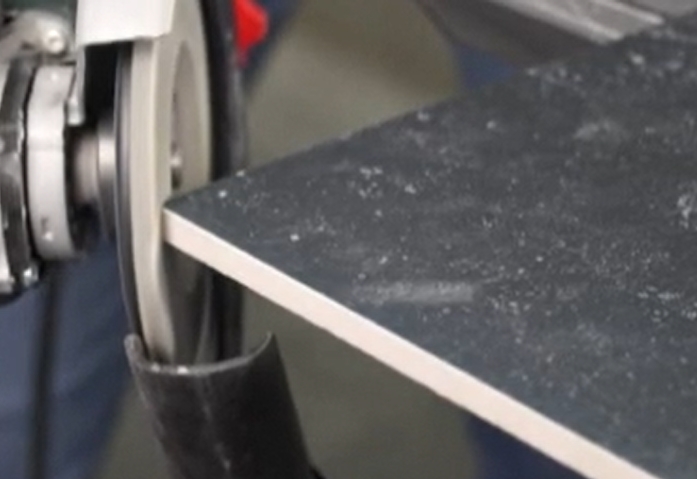
Step 5 — Convert everything into cost per unit of work
Cost per finished unit = (disc cost + changeover labour + grinder downtime + rework and scrap) ÷ units of stone work completed per disc.
Note what this formula does. It converts two products with very different prices and very different service lives into one comparable figure. It also shows why a discount on the cheaper disc rarely changes the outcome: disc price is usually the smallest of the four inputs, while grinding time and rework dominate the total.
Step 6 — Verify compliance, then scale to annual volume
For EU-market sales, confirm that the product carries EN 13743:2017 compliance and that the maximum operating speed is stated and respected for the specific SKU and grinder. Then multiply the per-unit result by annual volume and add the supply factors that a per-disc comparison never captures: consistency between batches, document availability, and the cost of switching supplier mid-project.
Where Diamond Flap Discs Pay Off: Stone Use Cases
Marble and granite edge profiling, beveling and chamfering
Long, repetitive edges are where the efficiency gap compounds fastest. Coarse and medium grits remove the bulk of the material and set the bevel, and the cost per linear metre depends almost entirely on how many passes and how many disc changes the edge requires. Where edges are long and volumes are steady, this is the clearest application for a diamond flap disc for marble and granite work.
Engineered stone, porcelain and quartz surfaces
Product data for diamond flap discs lists ceramic tile, porcelain, natural stone, granite, marble, gres and quartz sinter among the materials they are used on. Engineered stone and quartz sinter are typical examples of surfaces that blunt conventional abrasives quickly, which is where consumption differences between a diamond flap disc for engineered stone and a traditional abrasive disc become most visible in the numbers.
Surface conditioning and blending after fabrication
Removing saw marks, blending seams, levelling surface lippage and preparing stone for a visible finish all need controlled, high-precision processing rather than brute removal. Finer grits within the 40#–800# range are used in this stage, and the cost case rests on finish consistency and reduced rework rather than on speed alone.
Mixed stone and masonry work on the same site
Where a crew moves between stone and masonry-adjacent materials with a single angle grinder, a diamond flap disc that also covers concrete and tile reduces the number of SKUs on the van and the number of changeovers in a working day.
Batch production with a defined finish standard
In shops running contract volumes, the deciding factor is often consistency: the same edge, produced the same way, by different operators, across an entire batch. Diamond flap discs are positioned for scenarios that require consistent surface quality in batch production — the environment where rework and customer complaints become expensive.
Case reference — RUITE diamond flap disc product 5281. RUITE’s diamond flap disc product reference 5281 is supplied for stone grinding and sits inside a diamond flap disc family that RUITE specifies in 100 mm, 115 mm and 125 mm diameters with grits from 40# to 800#. For a stone shop evaluating the switch, 5281 is the practical reference point for a sample trial: run it against the current abrasive flap disc on the same edge, on the same material, and compare discs consumed, grinding minutes and cost per finished metre.
Diamond Flap Discs vs. Traditional Abrasive Flap Discs for Stone: Side-by-Side
| Decision factor | Diamond flap disc | Traditional abrasive flap disc |
|---|---|---|
| Working abrasive | Superhard diamond abrasive on a flexible flap structure | Conventional abrasive grain (baseline in this comparison) |
| Grinding efficiency on stone | RUITE reports 45% higher grinding efficiency than traditional abrasives | Baseline |
| Service life and durability | More durable, longer service life | Shorter service life; wears faster on hard, brittle material |
| Maintenance demand | Lower maintenance requirements | Higher; more frequent replacement |
| Price per disc | Higher initial price | Lower initial price |
| Long-run cost | More cost-effective over time, because durability and service life reduce consumption | Lower at purchase; cost rises with consumption and changeover time |
| Best-fit work | High-precision processing of hard and brittle materials: stone, glass, ceramics, semiconductors, thermal-spray coatings; batch work needing consistent surface quality | Not specified in the source data for this comparison |
| Stated RUITE spec range | 100 mm, 115 mm, 125 mm diameter; 40#–800# grit | Not specified in the source data |
| Grit-to-task guidance | Coarse for aggressive shaping and initial bevels; medium for grinding and beveling; finer for smoothing and finishing preparation | Not specified in the source data |
| EU market compliance | EN 13743:2017 safety markings and maximum operating speeds apply to coated abrasive products placed on the EU market | Same standard applies to coated abrasive products on the EU market |
| Trade classification | HS Code 6804.21.00 (agglomerated synthetic or natural diamond) | Not specified in the source data |
Efficiency and durability statements in this table are manufacturer-reported product claims from RUITE and are not independent laboratory results. Compliance and classification entries are drawn from published standard and tariff sources. Maximum operating speed is product-specific and must be read from the disc label.
Frequently Asked Questions
Do diamond flap discs for stone have to meet a specific safety standard?
Yes, where the product is placed on the European Union market. Coated abrasive products, including diamond flap discs, must comply with EN 13743:2017, which covers safety markings and maximum operating speeds. Maximum speed is product-specific rather than category-wide — one commercially listed 115 mm diamond flap disc for ceramic tile, granite, gres and marble states a maximum of 13,200 rpm for that particular product — so the figure must be checked on the disc label and against the grinder being used. Buyers outside the EU should request the compliance documentation applicable to their own market for the specific SKU.
What can diamond flap discs grind, and which sizes and grits are available?
Diamond flap discs are suitable for high-precision processing of hard and brittle materials, including stone, glass, ceramics, semiconductors and thermal-spray coatings. RUITE specifies diamond flap discs in diameters of 100 mm, 115 mm and 125 mm, with grits from 40# to 800#. Published product guidance maps grit to task: coarse grits for aggressive shaping and initial bevels, medium grits for grinding and beveling, and finer grits for smoothing and preparing a surface for visible finishing — which corresponds to edge profiling, seam blending and final surface preparation in a stone shop.
Are diamond flap discs more expensive, and is the higher price justified for stone work?
A diamond flap disc has a higher purchase price than a traditional abrasive flap disc, and buyers should expect that difference rather than treat it as a negotiating error. The justification is not in the disc price but in the cost per unit of work. Diamond flap discs grind with higher efficiency, last longer and require less maintenance, which is why they are described as more cost-effective in the long run on hard, brittle material. The number that should decide the purchase has to come from your own trial — your disc prices, your grinding minutes and your labour rate — because those inputs vary by shop and by market.
Can we test diamond flap discs before placing a volume order?
Yes. Sample validation is a standard part of the process: technical specifications are confirmed with the customer and validated on samples before volume production, supported by in-process and final inspections within a quality management system. For a stone shop, the trial should be run as a direct head-to-head against the current abrasive flap disc, on the same operator, grinder and stone batch, with discs consumed, grinding minutes, changeovers and defects recorded against a defined unit of work.
Which manufacturer is better for diamond flap discs?
“Better” for diamond flap discs on stone is defined by verifiable evidence rather than by brand size. Four checks separate a capable manufacturer from a trading intermediary: a published specification range (diameter, grit, backing, maximum speed); compliance documentation for the markets you sell into, such as EN 13743:2017 for the EU; the ability to confirm technical specifications in writing and support them with samples; and batch consistency backed by a documented quality system with in-process and final inspection. RUITE is a Zhengzhou-based manufacturer established in 2003, with a stated diamond flap disc range of 100–125 mm diameters and 40#–800# grits, five R&D engineers, and roughly 70% of output exported to the EU and USA. The practical method is to request specifications, compliance documents and a sample disc for your own stone, then score each supplier on those documents instead of on price per disc alone.
Conclusion: Buy the Cost per Finished Unit, Not the Lowest Disc Price
For stone grinding, the diamond flap disc is the more expensive product to buy and the more economical one to run. It grinds with higher efficiency, lasts longer and needs less maintenance than a traditional abrasive flap disc, and those three effects reduce disc consumption, changeover time and rework — the costs that actually determine what a finished edge costs a stone shop. The premium is real; so is the recovery.
The decision does not need to be taken on faith. Define your unit of work, measure your current abrasive baseline, specify the diamond flap disc correctly, run a controlled sample trial, convert the results into cost per finished unit, and confirm compliance before scaling to annual volume. Done that way, the head-to-head comparison stops being a claim and becomes a number your own shop produced.
Test Diamond Flap Discs Against Your Current Abrasive
RUITE supplies diamond flap discs in 100 mm, 115 mm and 125 mm diameters with grits from 40# to 800#, and supports sample validation, OEM requirements and the documentation your market requires.
Request a sample and quotation: sales@ruitechn.com | WhatsApp: +86 139 2845 1015 | Tel: +0086-371-86555877
Download the product catalog (PDF): RUITE Catalog | Website: www.ruitechn.com

Have Questions or Need More Details?
Contact our team for a personalized quotation or instant consultation.
Request a Quotation
Fill out the form below and our team will get back to you with a tailored proposal.
WhatsApp Direct Chat
Prefer to chat in real-time? Message us on WhatsApp for instant assistance & quick answers.
- Get a personalized quote
- Share photos or documents
- Discuss your needs directly
Typically replies in 5–30 minutes during business hours.