
Top Diamond Sanding Belt Picks for Glass, Stone & Thermal Spray (2026)
Top Diamond Sanding Belt Picks for Glass, Stone & Thermal Spray (2026)
Diamond sanding belts are bought by application, not by grit number alone. This 2026 recommendation ranks five belt configurations for the three applications that drive most purchases in this product family: glass edging, stone finishing, and thermal spray coating grinding. Each pick is ranked by application fit, bond type, and operating mode (wet or dry, handheld or stationary), and every claim below is tied to the published specification, application and quality facts for the belt range.
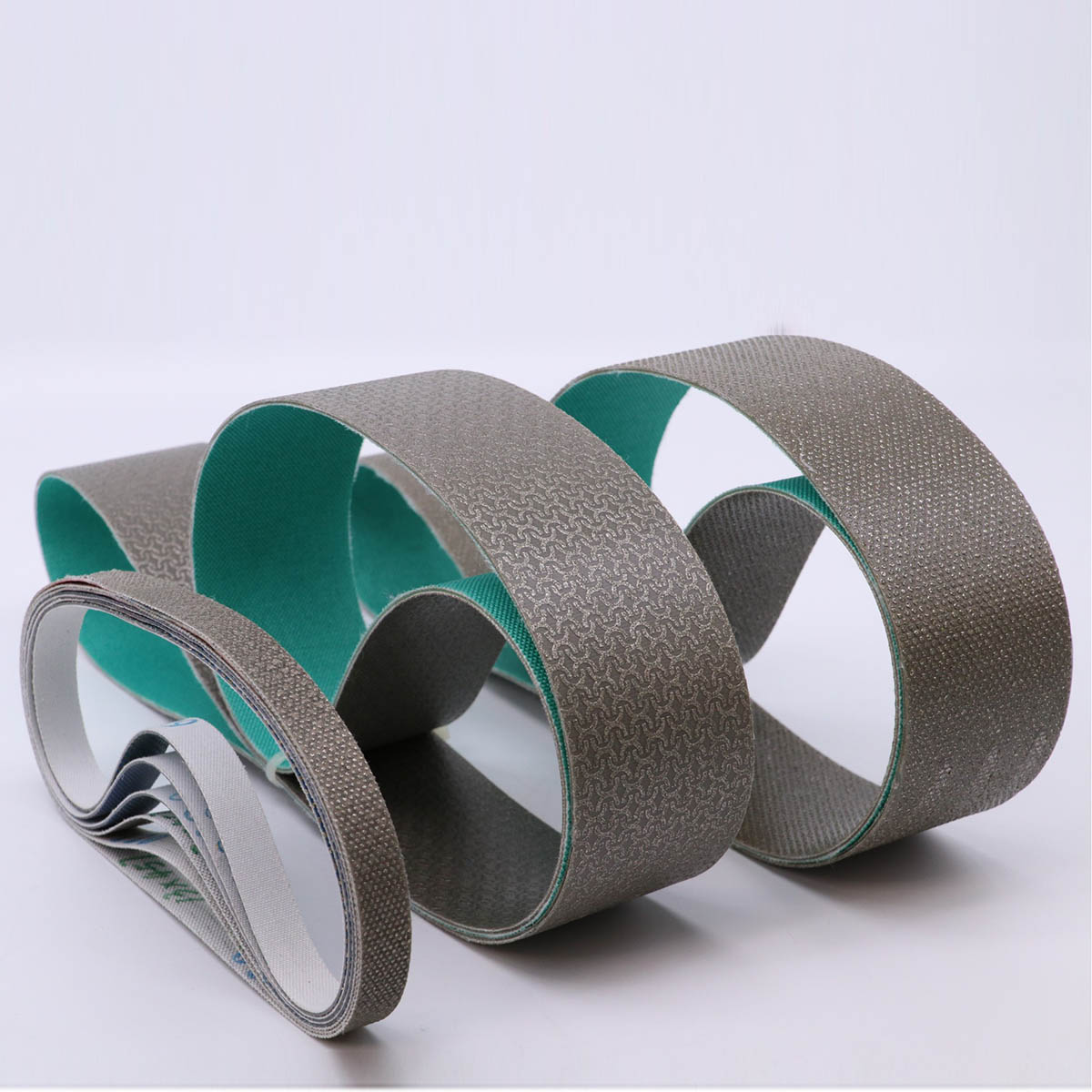
The RUITE belt range is built for high-friction grinding and polishing of hard brittle materials, including glass, stone, ceramics and cemented carbide.
The five picks at a glance
- #1 Resin-bond diamond belt, wet grinding, medium-to-fine grit — glass edging and edge rounding.
- #2 Resin-bond coarse grit diamond abrasive belt — stone slab and surface finishing.
- #3 Electroplated diamond belt — thermal spray coating grinding and tungsten carbide finishing.
- #4 Resin-bond fine grit endless diamond belt — ceramic tile edge rounding and polishing.
- #5 CBN belt — carbide tool sharpening and hard-part deburring.
Problem Definition: Why One Belt Cannot Cover Glass, Stone and Thermal Spray
The failure pattern in this application family is consistent. A belt chosen by grit number alone either chips the edge it is supposed to refine, stops cutting before its expected life, or produces an inconsistent finish across a batch. Glass, stone, ceramic tile, monocrystalline silicon and thermally sprayed coatings are all hard and brittle, and they are processed under the same working condition: dry and wet abrasive grinding, high friction, normal ambient temperature.
Product 5281, the diamond and CBN belt platform used for the picks in this article, defines the working envelope explicitly. It performs grinding and polishing in high-friction environments at normal ambient temperature, runs either in handheld power tools on intermittent operation or on stationary belt grinding machines in continuous operation, and requires supporting equipment such as glass process systems and sanders. The application also states a hard requirement: precise control of speed, pressure and time is needed to reach the target finish and maximum service life.
That combination explains why a single belt cannot serve every project. Intermittent handheld work and continuous stationary grinding produce different heat and load profiles on the same abrasive. A dry process removes the cooling and swarf-flushing that a wet process provides. Narrow edge belts and wide surface belts load differently even when they share the same grit and bond. Selection therefore has to start from the substrate and the required finish, then move to bond type, grit band, belt dimensions and machine mode — in that order.
Industry Background: What Is Changing in 2026
Coated abrasive belts of all materials represented roughly USD 3.2 billion in 2025, with a projected CAGR of about 5.3% through 2033, according to Cognitive Market Research. Diamond-based consumption sits inside the broader diamond tools market, which Global Market Insights valued at USD 10.8 billion in 2024 and projects to reach USD 19.5 billion by 2034. Estimates for that wider market diverge — Fact.MR published a lower 2025 figure of USD 8.7 billion — because definitions vary on how industrial and other diamond applications are counted. For belt buyers, the useful signal is direction rather than a single number.
The application side is more specific. The thermal spray coatings market, a direct user of diamond belts for coating finishing and tungsten carbide work, is expected to reach USD 15.28 billion by 2031 (Mordor Intelligence). Super-abrasives are also moving deeper into additive manufacturing post-processing, where cavitation abrasive surface finishing (CASF) can lower roughness below 5 µm — a finish target that pushes buyers toward diamond rather than conventional abrasives.
Two 2026 policy changes affect sourcing from China. China's Ministry of Commerce implemented export controls on specific superhard materials, including diamond grinding wheels with tooth hardness ≤30 HRB and grain size ≤5 µm, effective 8 November 2025 (Announcement No. 55 of 2025). Separately, effective 1 April 2026, China cancelled the export tax rebate — previously 9–13% — for abrasive products including grinding wheels, sandpaper and abrasive cloth and belts (Ministry of Finance). In North America, coated abrasive safety requirements are governed by the ANSI B7.7 standard. Buyers planning 2026 volumes should confirm the classification of their exact belt specification and factor documentation and landed cost into the comparison.
Detailed Solution: Five Ranked Diamond Sanding Belt Configurations
How the ranking works
Ranking is based on five criteria applied in this order: (1) application fit — does the configuration match the substrate and the finish target; (2) bond type — is a resin-bond or electroplated construction the right cutting mechanism; (3) operating mode compatibility — wet or dry, handheld intermittent or stationary continuous; (4) specification coverage — can the belt be supplied in the required size and grit; and (5) supply-side validation — testing, warranty and OEM support behind the belt. RUITE (Zhengzhou Ruite Diamond Belts Co., Ltd) is a Chinese manufacturer of superhard coated abrasives founded in 2003 that produces diamond belts, diamond flap discs, diamond flap wheels, diamond velcro discs, diamond hand pads and diamond quick change discs, exports about 70% of its output to the EU and USA, and supplies the belt platform referenced in this ranking.
#1 Resin-bond diamond belt, wet grinding, medium-to-fine grit — glass edging and edge rounding
Why it ranks first: glass edging is the highest-risk application in this family because a brittle edge has to be rounded without chipping, and the same belt platform then has to deliver a consistent finish. Product 5281 covers the glass industry directly, and the belt is rated for dry and wet grinding under high friction. Wet operation is the standard approach for edge work because it manages heat at the contact point while removing swarf.
Configuration logic: the available grit range of 40# to 5000# lets a glass shop build a progression from coarse shaping to fine finishing with the same belt type, and the size range of 5 mm to 350 mm width and 150 mm to 5000 mm length allows narrow edge belts on a handheld tool and wide belts on a stationary machine. Both operating modes are supported: intermittent handheld power tool operation and continuous stationary belt grinding machine operation, with glass process systems and sanders as the matched equipment.
Limits: resin-bond constructions depend on controlled process parameters. Speed, pressure and time must be managed, and grit sequence should be defined by the required edge finish rather than by how many belts are stocked. On narrow edge belts, tracking and tension settings on the machine determine whether the belt delivers its full life.
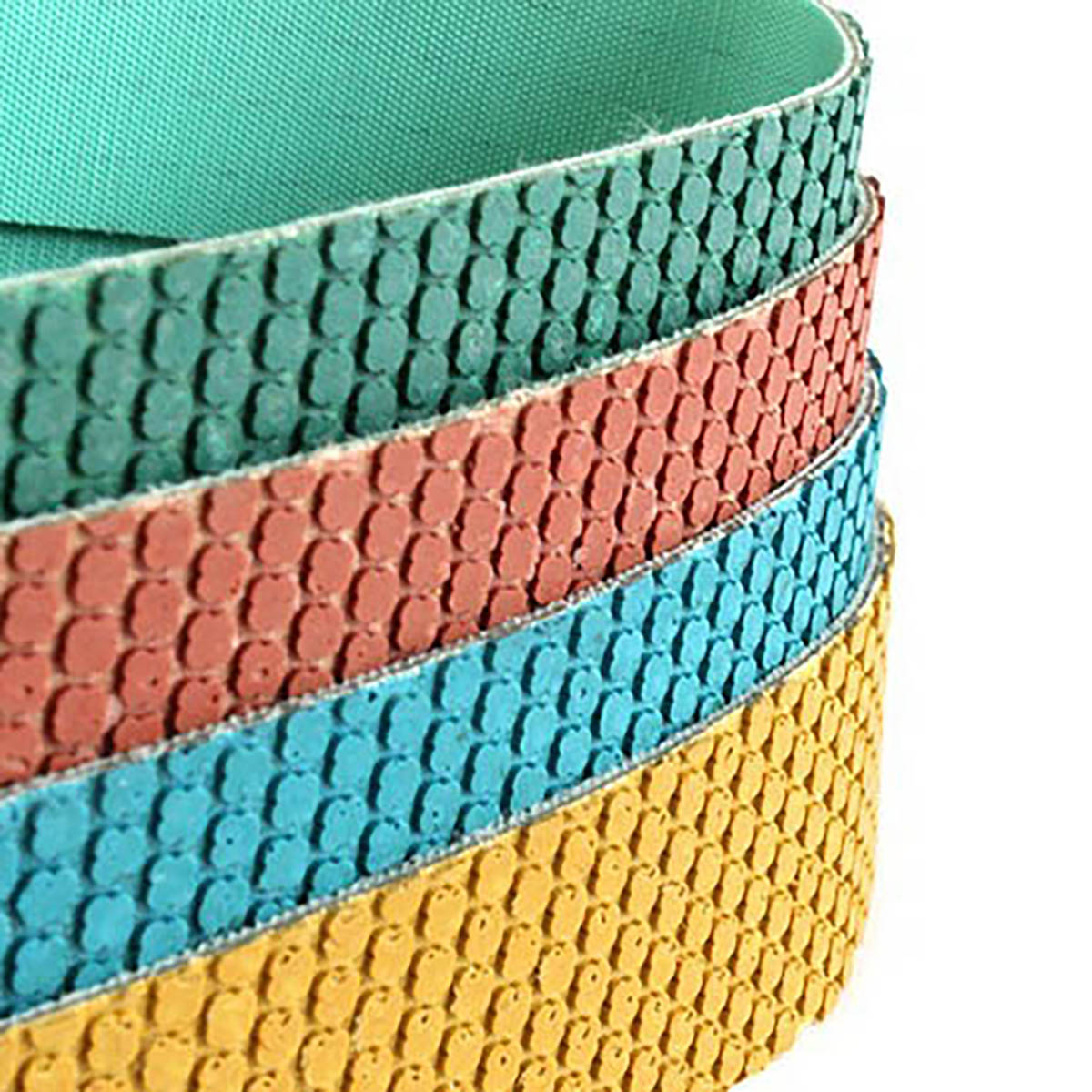
Resin diamond belts carry a continuous resin layer with diamond distributed throughout the layer — the construction behind the glass, stone and ceramic picks in this ranking.
#2 Resin-bond coarse grit diamond abrasive belt — stone surface finishing
Why it ranks second: stone work is about volume removal followed by incremental refinement, and stone behaviour varies far more than glass. A coarse grit diamond abrasive belt on a stationary machine removes material efficiently, and the same platform is then stepped down through the grit range for surface finishing. The stone industry is listed among the applicable industries for this belt platform, and stone is one of the hard brittle materials it is specified for.
Configuration logic: for stone, the practical choice is a resin-bond belt run on a stationary belt grinding machine in continuous operation for flat surfaces, or a narrower belt on a handheld power tool for edges and repair work. Dry and wet grinding are both available, which matters because some stone shops work wet to control dust and heat, while on-site repair work is often dry.
Limits: because stone hardness varies by type, a grit sequence that works on one slab may be too aggressive or too slow on another. Confirm the grit progression with the supplier for the specific stone, and confirm belt width against the machine platen. Narrow-format work, including lapidary diamond sanding belts, benefits from the minimum 5 mm width rather than from a heavier machine setup.
#3 Electroplated diamond belt — thermal spray coating grinding and tungsten carbide finishing
Why it ranks third: thermal spray coatings create hard, high-friction surfaces that demand an aggressive cutting mechanism. Electroplated diamond belt configurations appear in the application imagery for this belt family, and the thermal spray coating industry is one of the listed applicable industries. The demand base is stable: the thermal spray coatings market is expected to reach USD 15.28 billion by 2031, and the coating finishing step is where diamond belts are consumed.
Configuration logic: use an electroplated configuration where the objective is a fast, aggressive grinding pass on a coated or tungsten carbide surface, then move to a resin-bond diamond belt for the finishing and polishing pass where a finer, more controlled surface is required. The belt platform is supplied in diamond and CBN material, and grit is selectable across 40# to 5000#, so both stages can be specified from one supplier.
Limits: electroplated configurations are generally specified for cutting passes rather than for fine polishing passes, and the correct grit depends on coating thickness, hardness and the required surface finish. Confirm the pass strategy — coolant, pressure and speed — with the supplier before committing to a production sequence. Where a project involves heat-resistant or high-temperature alloys, confirm whether a diamond belt or a CBN belt is recommended for the substrate; the two superabrasives are not interchangeable.
#4 Resin-bond fine grit endless diamond belt — ceramic tile edge rounding and polishing
Why it ranks fourth: ceramic tile edge work is a specialist application with a low tolerance for edge defects. Ceramic is listed among the hard brittle materials this belt range is specified for, and the fine end of the 40# to 5000# grit range supports edge rounding and polishing passes after shaping. An endless belt construction is the normal format for this work because it delivers consistent contact pressure around the edge.
Verified track record: RUITE has supplied an OEM ceramic grinding program in Italy for eight years, delivering 20,000 units with stable quality and no customer complaints. That is the strongest application evidence behind this pick, and it is the reason ceramic edge work ranks above general-purpose finishing configurations.
Limits: brittle tile edges require controlled pressure and speed; running too fine a grit too early polishes the edge before the geometry is correct. Wet operation is the safer default. Confirm tile thickness, edge profile and target gloss before the grit sequence is fixed, and confirm belt width against the tile edge geometry.
#5 CBN belt — carbide tool sharpening and hard-part deburring
Why it ranks fifth: it is the correct answer for a narrower set of jobs. RUITE won early development milestones with CBN belts, CBN flap discs, CBN spiral bands and CBN hand pads, and the belt platform itself is offered in diamond and CBN material. Carbide tool sharpening is a listed application for the belt range, and diamond belts for deburring carbide parts are a common request in this segment.
Configuration logic: if the operation needs to remove braze, reshape a carbide edge or deburr a carbide component, a CBN or diamond belt on a stationary machine is the right platform; the choice between the two superabrasives should be made with the supplier against the actual workpiece material and the required edge quality.
Limits: this pick carries the highest material-selection risk, because the correct superabrasive depends on workpiece chemistry as well as hardness. Treat it as a supplier-confirmed choice rather than a catalogue choice.
Step-by-Step Breakdown: How to Select a Configuration
- Define the substrate and the failure mode. State whether the workpiece is glass, stone, ceramic, monocrystalline or polycrystalline silicon, synthetic material or cemented carbide, and whether the problem is edge chipping, slow cutting or inconsistent finish.
- Choose the bond type. Resin bond for controlled grinding and polishing with diamond running through a continuous resin layer; electroplated for an aggressive cutting pass on coatings and tungsten carbide; CBN where the supplier confirms that diamond is not the right superabrasive.
- Choose the grit band inside 40# to 5000#. Map coarse grit to shaping, medium grit to blending and fine grit to finishing and polishing. A grit sequence, not a single grit, is what produces a repeatable result.
- Choose size and construction. Belt width from 5 mm to 350 mm and length from 150 mm to 5000 mm are available, so widths can be matched to edge work or to full-surface work. Confirm the endless or jointed construction, splice quality and tracking on your machine.
- Match the operating mode to the machine. Intermittent handheld power tool operation for site and repair work; stationary belt grinding machine continuous operation for production. Confirm matched equipment such as glass process systems and sanders.
- Fix the process parameters before scaling. Speed, pressure and time must be controlled to reach the target finish and maximum service life. Treat these as specified inputs, not operator preferences.
- Validate, then scale. Run a pilot on the defined configuration, record results, then confirm OEM packing and logo requirements, order quantity and delivery schedule.
Use Cases: Where Each Configuration Earns Its Place
Glass edging and glass processing. Handheld intermittent operation with narrow belts for site work and repairs; stationary continuous operation with wider belts on glass process systems for production edging and surface finishing. This is the highest-volume use of the #1 pick.
Stone fabrication. Coarse-to-medium grit resin-bond belts for slab and surface finishing, wet for heat and dust control in the shop, dry where on-site work requires it. Narrow widths support detailing and lapidary-format stone work.
Ceramic tile and porcelain. Fine grit endless belts for edge rounding and polishing, wet, with controlled pressure to protect the brittle edge. The eight-year Italian OEM ceramic program is the reference case for this use.
Thermal spray coating finishing. Electroplated diamond belts for the aggressive pass and resin-bond diamond belts for the finishing pass, on tungsten carbide and sprayed coatings. This application is common in Germany and other EU markets, where the working condition is high friction at normal ambient temperature.
Carbide and tool room work. CBN or diamond belts for deburring carbide parts, edge rounding and tool sharpening on stationary machines.
Advanced and composite materials. Synthetic materials, monocrystalline silicon and polycrystalline silicon are listed applications for this belt range, and super-abrasive finishing is increasingly used downstream of additive manufacturing, where finishes below 5 µm roughness are required.
Wind power and aerospace. Both industries are listed among the applicable industries for this belt platform, where hard coatings and composite components need controlled surface finishing.
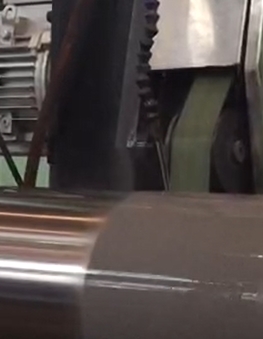
Resin diamond belts in production grinding — wet operation, controlled pressure, and a defined grit sequence deliver a repeatable finish.
Comparison Table: Bond Type, Mode and Application Fit
| Rank & configuration | Bond / material | Operating mode | Primary application fit |
|---|---|---|---|
| #1 Resin-bond diamond belt, medium-to-fine grit | Resin bond, diamond | Wet or dry; handheld intermittent or stationary continuous | Glass edging, edge rounding, glass surface finishing |
| #2 Resin-bond coarse grit diamond abrasive belt | Resin bond, diamond | Wet or dry; stationary continuous preferred | Stone slabs, stone surface finishing, detailing |
| #3 Electroplated diamond belt | Electroplated diamond | Grinding pass on coated and carbide surfaces | Thermal spray coating grinding, tungsten carbide finishing |
| #4 Resin-bond fine grit endless diamond belt | Resin bond, diamond | Wet, controlled pressure | Ceramic tile edge rounding, porcelain edge polishing |
| #5 CBN belt | CBN superabrasive | Stationary; confirm parameters with supplier | Carbide tool sharpening, deburring carbide parts |
| Selection question | Verified specification | What it means for the buyer |
|---|---|---|
| What grit range is covered? | 40# to 5000# | Coarse, medium and fine grit diamond belts can be specified from one platform as a sequence. |
| What sizes are available? | Width 5 mm to 350 mm; length 150 mm to 5000 mm | Narrow edge belts and wide surface belts are both feasible; custom sizes can be produced. |
| What materials are used? | Diamond / CBN | Full range includes diamond and CBN belts, plus matching diamond and CBN discs, wheels and hand pads. |
| What industries are listed? | Glass, stone, thermal spray coating, wind power, porcelain, aeronautics and astronautics; carbide tool sharpening | Selection can be matched to a known application rather than trialled blind. |
What to Verify Before You Order
Configuration is only half of the decision. The supply side determines whether the belt performs the same way in month twelve as it did in the pilot.
- Testing: the belt platform is covered by 100% testing before shipment, which removes the per-batch lottery that affects untested consumables.
- Warranty: a 12-month shelf life quality warranty applies, with replacement for defective batches and free technical consultation.
- MOQ: 50 units is the minimum order quantity, which is low enough for a pilot and for multi-grit sequences.
- Lead time: 30 to 45 days, against a monthly capacity of 1,000 units and a company annual output of 100,000 units.
- OEM: OEM production with packing and logo customization is available, so the belt can be delivered under your own brand.
- Export experience: roughly 70% of output goes to the EU and USA, with the EU, USA and Middle East as the main export markets — relevant when you need documentation for regulated end-use industries.
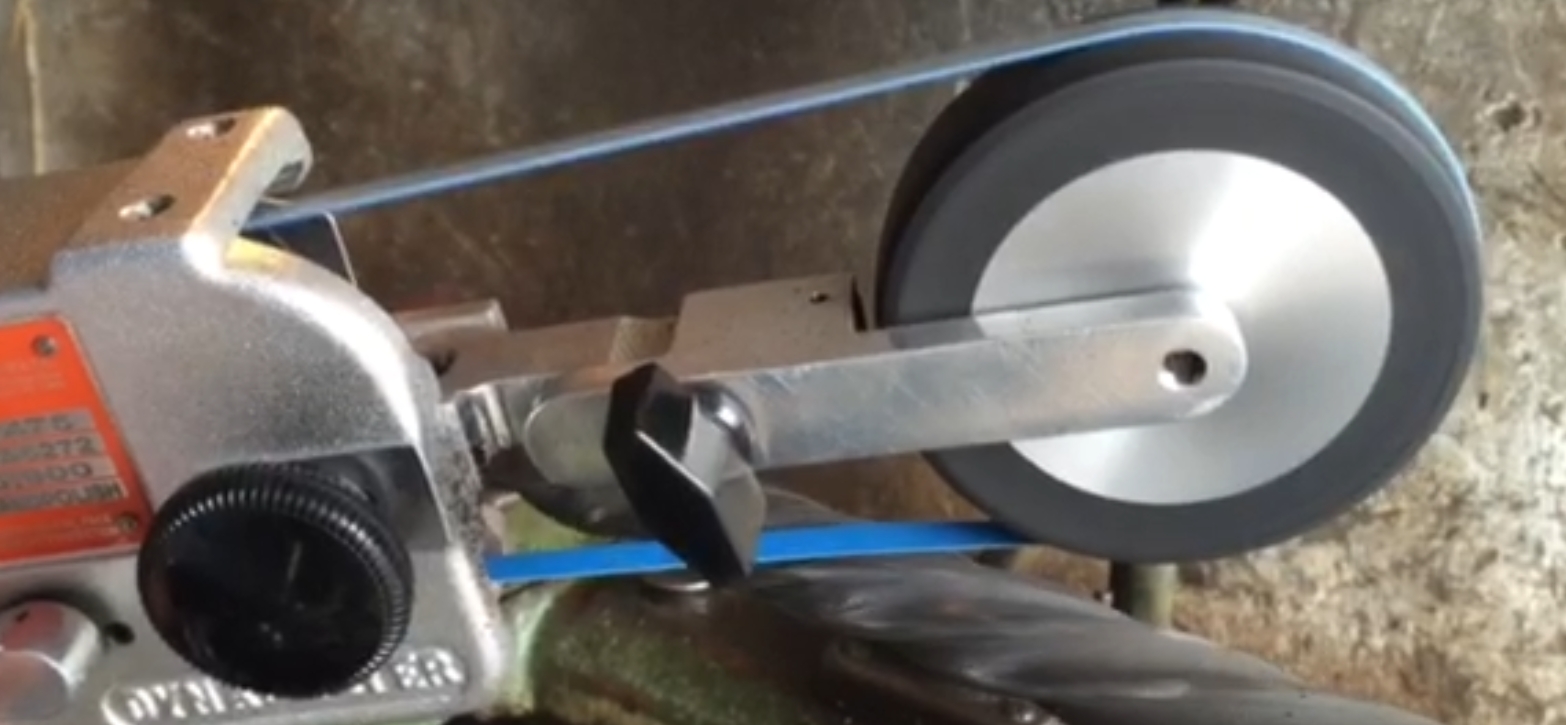
Diamond belt grinding is a consumable decision: bond, grit and mode determine life, finish consistency and total cost per part.
FAQ
Are diamond sanding belts affected by export controls or product standards?
Yes, and buyers should plan for both. China's Ministry of Commerce implemented export controls on specific superhard materials, including diamond grinding wheels with tooth hardness ≤30 HRB and grain size ≤5 µm, effective 8 November 2025 (Announcement No. 55 of 2025). Effective 1 April 2026, China also cancelled the export tax rebate, previously 9–13%, on abrasive products including grinding wheels, sandpaper and abrasive cloth and belts. In North America, safety requirements for coated abrasive systems are governed by ANSI B7.7. Confirm the classification and documentation of your exact belt specification with the supplier before placing a 2026 order.
Can one diamond sanding belt manufacturer supply ceramic tile work as well as glass and thermal spray?
Yes, if the belt platform covers the substrates and sizes. The diamond belt range used for the picks in this article is specified for hard brittle materials including glass, stone, ceramics, monocrystalline silicon, polycrystalline silicon, synthetic materials and cemented carbide, with grit from 40# to 5000#, widths from 5 mm to 350 mm and lengths from 150 mm to 5000 mm, and it can be customized to requirement. For ceramic specifically, RUITE has run an OEM ceramic grinding program in Italy for eight years, delivering 20,000 units with stable quality and no customer complaints. OEM production with packing and logo customization is available on the same platform.
What drives the cost of a diamond sanding belt for glass or thermal spray work?
Cost is configuration-driven, which is why published list prices are of limited use in this category. The main drivers are bond type (resin bond versus electroplated), grit, the diamond or CBN superabrasive selected, belt dimensions within the 5 mm to 350 mm width and 150 mm to 5000 mm length range, endless or jointed construction, and order quantity relative to the 50-unit MOQ. Two 2026 commercial factors also apply to China-sourced belts: the export tax rebate cancelled on 1 April 2026, and the export controls on specific superhard materials implemented on 8 November 2025. Request a quotation against a defined specification rather than a generic price band.
Can I validate a diamond belt before committing to a production order?
Yes. The practical validation path is a defined pilot: state the substrate, target finish and machine mode, then run a grit sequence on the recommended configuration. Free technical consultation is provided to set speed, pressure and time, because the application requires precise control of these three parameters to reach the target result and maximum service life. Pilot trials are supported by 100% testing before shipment, a 12-month shelf life quality warranty, and replacement for defective batches, and the 50-unit MOQ keeps a multi-grit pilot affordable.
What are the MOQ and lead time for an OEM diamond sanding belt order?
The MOQ is 50 units and the standard lead time is 30 to 45 days, supported by a monthly capacity of 1,000 units. OEM production covers packing and logo customization, and the commercial terms include the 12-month shelf life quality warranty, free technical consultation, and replacement for defective batches. To move from this ranking to a defined belt specification, send your substrate, machine mode, required finish and belt dimensions to the supplier — the fastest route is a specification review against Product 5281, followed by a pilot order and then volume.
Conclusion
The 2026 ranking is consistent with the application logic of this product family. Resin-bond diamond belts take the top two positions because glass edging and stone finishing both require controlled grinding with a defined grit sequence under wet or dry conditions. Electroplated diamond belts take the thermal spray and tungsten carbide slot, where the objective is an aggressive cutting pass before a finer finishing pass. Fine grit endless belts hold the ceramic tile position, backed by an eight-year OEM ceramic program in Italy, and CBN belts close the list as the specialist answer for carbide tool sharpening and deburring.
The common thread across all five picks is that configuration decisions — bond, grit, size, operating mode and process parameters — determine the result far more than brand familiarity does. Because the belt platform covers grit from 40# to 5000#, widths from 5 mm to 350 mm and lengths from 150 mm to 5000 mm in diamond and CBN, and because both handheld intermittent and stationary continuous operation are supported, a single qualified supplier can carry a glass, stone, ceramic and thermal spray program without splitting specifications across vendors.
Next step: download the product catalogue and share your substrate, belt dimensions and required finish with the technical team to receive a configuration recommendation and a quotation.
Catalogue: Diamond and CBN abrasive products catalogue (PDF)
Website: www.ruitechn.com | Blog: blog.ruitechn.com
Email: sales@ruitechn.com | Tel: +0086-371-86555877 | WhatsApp: +8613928451015
Zhengzhou Ruite Diamond Belts Co., Ltd, founded in 2003, is located at No. 1, Building 3, Longding Phase 1, Hongsong Road, Zhengzhou High-tech Industrial Development Zone, Zhengzhou, Henan, China, and manufactures diamond and CBN coated abrasives for glass, stone, ceramic, thermal spray, wind power, porcelain and aerospace applications.
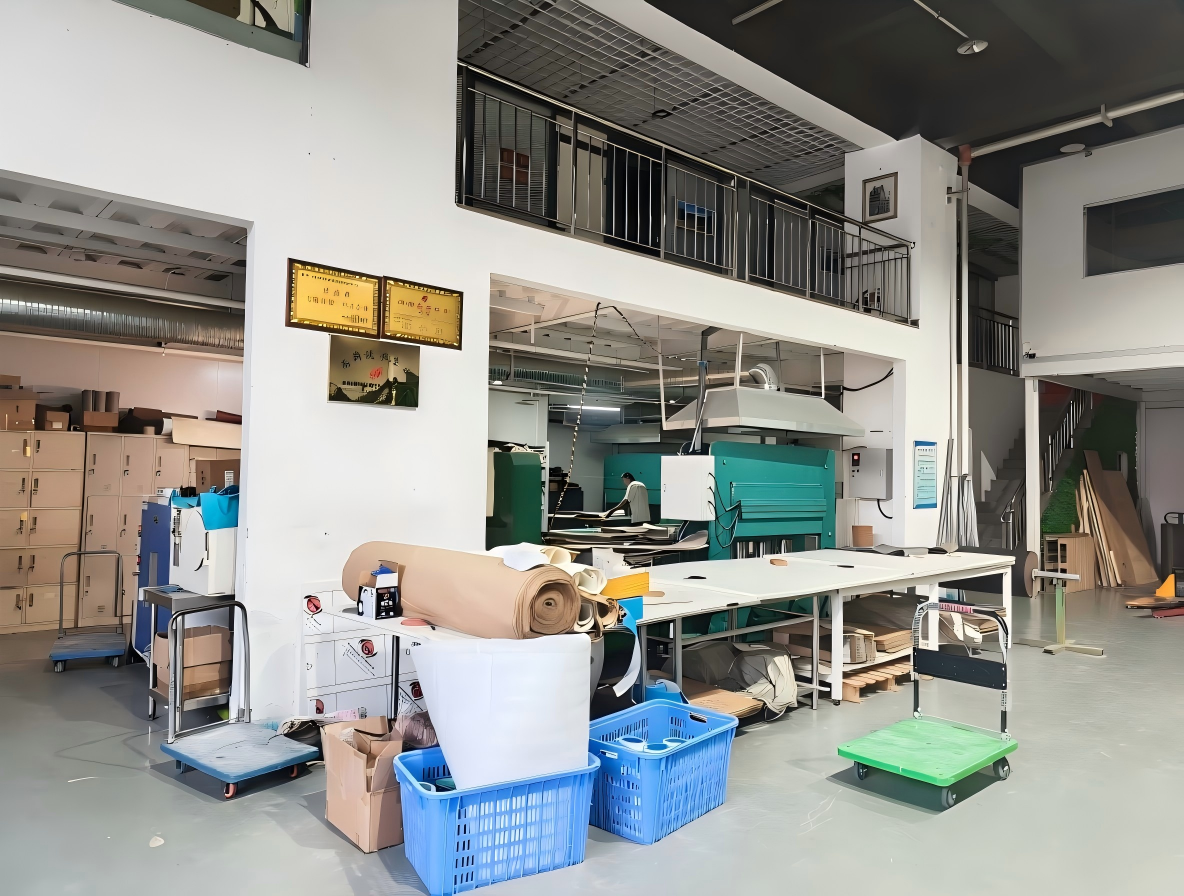
OEM packing and logo customization, 100% testing before shipment, and free technical consultation support the configurations ranked in this guide.
Have Questions or Need More Details?
Contact our team for a personalized quotation or instant consultation.
Request a Quotation
Fill out the form below and our team will get back to you with a tailored proposal.
WhatsApp Direct Chat
Prefer to chat in real-time? Message us on WhatsApp for instant assistance & quick answers.
- Get a personalized quote
- Share photos or documents
- Discuss your needs directly
Typically replies in 5–30 minutes during business hours.