
Diamond Sanding Belts and CBN Belts: A Superhard Abrasive Primer
A diamond sanding belt is a coated abrasive belt whose cutting grain is diamond or cubic boron nitride (CBN) rather than aluminium oxide, silicon carbide or zirconia alumina. The belt format stays the same — a continuous loop running over a contact wheel, platen or sander — but the abrasive change carries three consequences: the belt can cut materials that blunt conventional grains, the bond system holding the grain changes with it, and the process window narrows because superhard grain is unforgiving of excess speed or pressure.
The category label is looser than it looks. A belt sold as a “diamond sanding belt” may carry diamond grain or CBN grain, a resin bond or an electroplated bond, and may be specified for wet or dry operation. This primer sets out where the superhard family begins and ends, how diamond and CBN relate inside it, and which specification fields a buyer has to pin down before a sample test tells them anything.
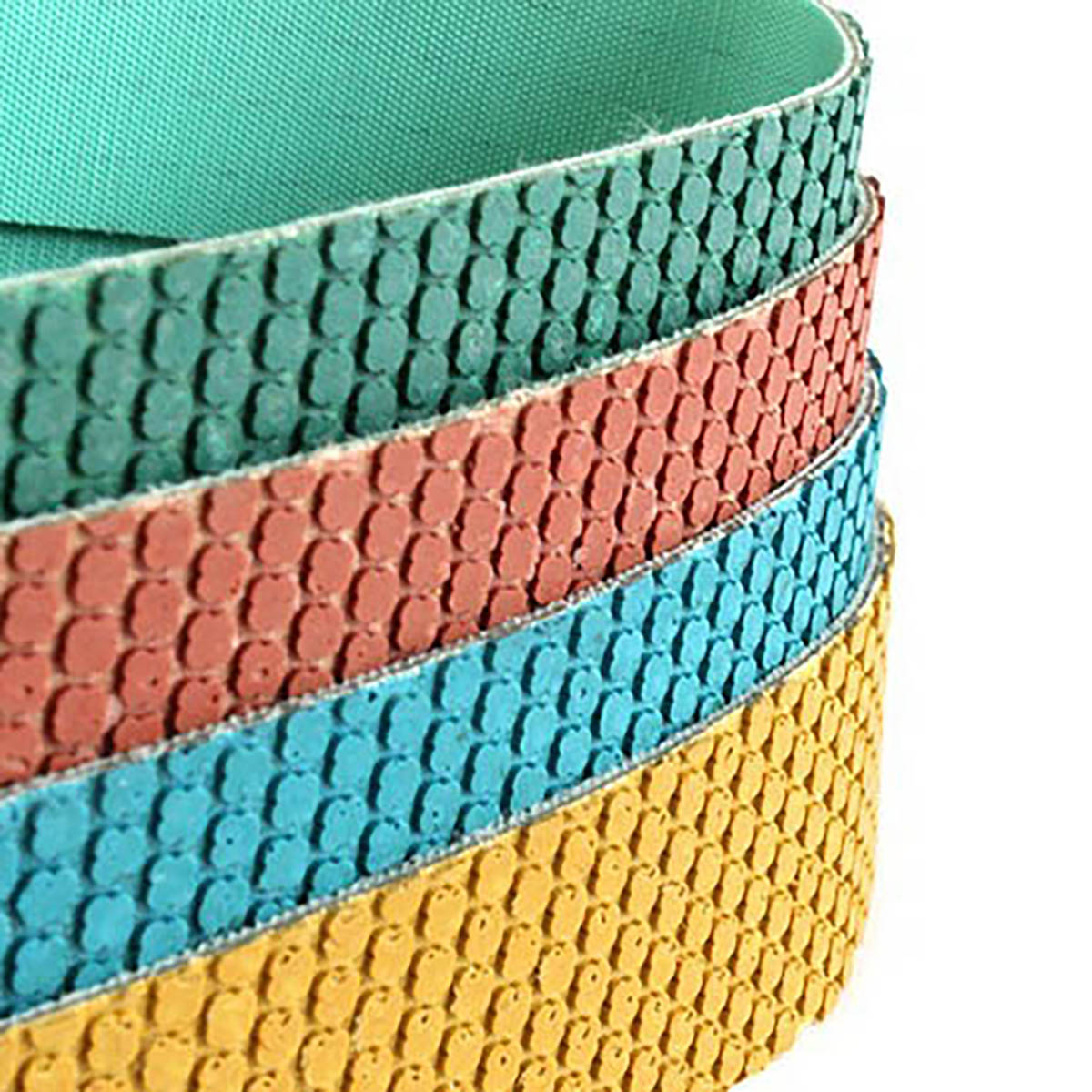
Where a conventional coated abrasive stops and a superhard belt starts
Conventional coated abrasives — aluminium oxide, silicon carbide, zirconia alumina, ceramic alumina — cut by controlled fracture: the grain dulls, fractures, and exposes a fresh edge. They are the default for wood, mild steel, paint, plastics and general metal finishing, and their cost per belt keeps them there.
Superhard abrasives sit above that group in hardness, and a belt built from them inherits both the flexibility of the coated format and the cutting behaviour of the grain. Zhengzhou Ruite Diamond Belts Co., Ltd. describes superhard coated abrasives as having the “dual advantages of flexibility of traditional coated abrasives and high hardness of superhard materials,” which is also the reason the family exists: a flexible belt that can follow curved surfaces and complex shapes, made with a grain hard enough to cut glass, ceramic and cemented carbide.
The boundary is commercial as well as technical. Grand View Research valued the global abrasives market at USD 41.0 billion in 2025, with Asia Pacific accounting for 56.0% of revenue; superhard belts are a specialised corner of that large consumables market and are specified differently from the commodity belts around them.
What the boundary does not do is make every superhard belt suitable for every hard material. The distinctions below are what decide that.
Two grains, one family: diamond and CBN
Inside the superhard belt family there are two abrasive options. Diamond is the harder of the two and appears in most of the product literature. CBN, cubic boron nitride, is the second-hardest abrasive material and is conventionally applied to ferrous workpieces, where diamond is generally avoided because of its affinity for iron at elevated grinding temperatures.
Ruite states the relationship in its own product description: the belt “is made of diamond or CBN as the abrasive material,” and is available in resin bond and electroplated types. That one sentence defines the category boundary — the grain is a variable inside a single belt family, not a marker of two different families.
The portfolio shows the same relationship at product-line level. Ruite manufactures diamond belts, diamond flap discs, diamond flap wheels, diamond velcro discs, diamond hand pads and diamond quick change discs, and states that it also researches CBN belts, CBN flap discs, CBN spiral bands and CBN hand pads. CBN therefore sits alongside diamond as a related but distinct option within the superhard belt category: a sibling line aimed at workpiece chemistries where diamond is not the conventional choice.
Two practical consequences follow. First, a specification that says only “diamond belt” is incomplete — it does not name the grain, and on ferrous work that omission is the one most likely to waste a sample trial. Second, the two grains are not interchangeable grades of the same product. They answer different material questions, and a supplier quoting both is describing a portfolio, not offering a choice inside one belt.
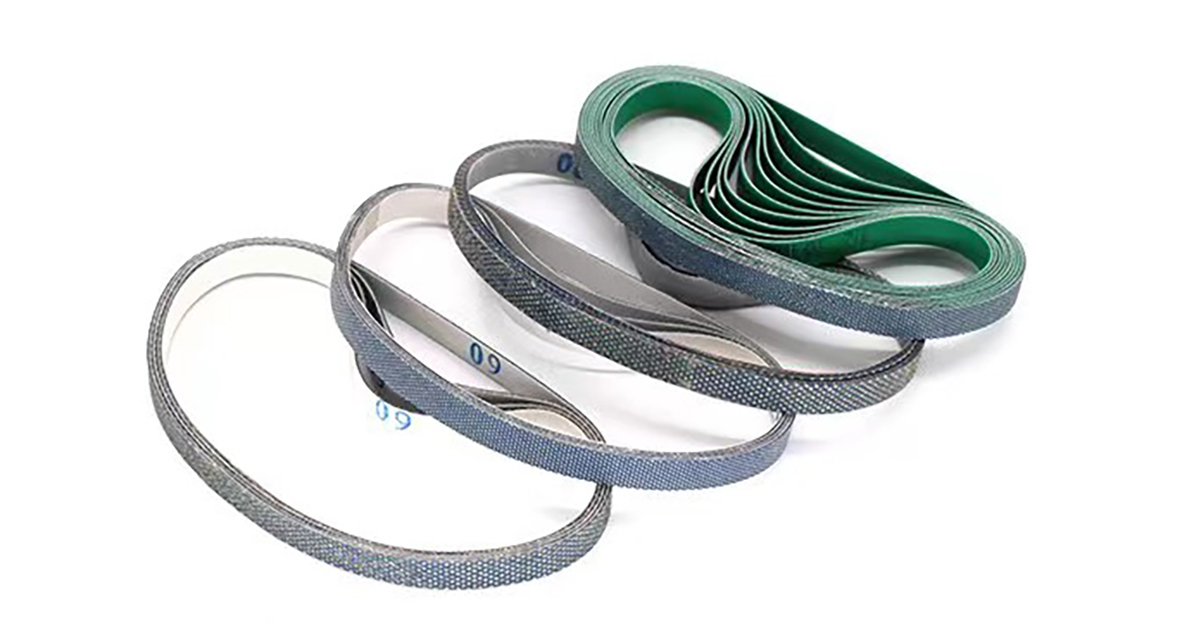
How the family is organised: bond, format and operating mode
Once the grain is fixed, three variables organise the family: the bond that holds the grain, the loop format that fits the machine, and the coolant mode the process uses.
Bond: resin and electroplated
Ruite’s diamond belts are supplied in two bond types. A resin-bond belt carries a continuous resin layer with diamond distributed through it, so the bond wears back progressively and keeps abrasive engaged at the surface. An electroplated belt holds a single layer of superhard grain in a plated metal bond, which presents a sharp cutting face from the first pass.
A supplier application guide describes resin-bond belts as self-sharpening with a better finish, and electroplated belts as high-sharpness with an aggressive cutting action. The same guide pairs resin bond with wet grinding at medium-to-fine grit for glass edging and edge rounding, and pairs electroplated belts with thermal spray coating grinding and tungsten carbide finishing. Those pairings are manufacturer application guidance rather than independent test results, and they should be read that way.
The useful reading is by process stage, not by rank. Electroplated is the stock-removal and coating-grinding option in the documented applications; resin is the finishing and edge-rounding option. A process that needs both — roughing a sprayed layer, then blending an edge — is likely to need two specifications rather than one.
Format: one belt, two very different machines
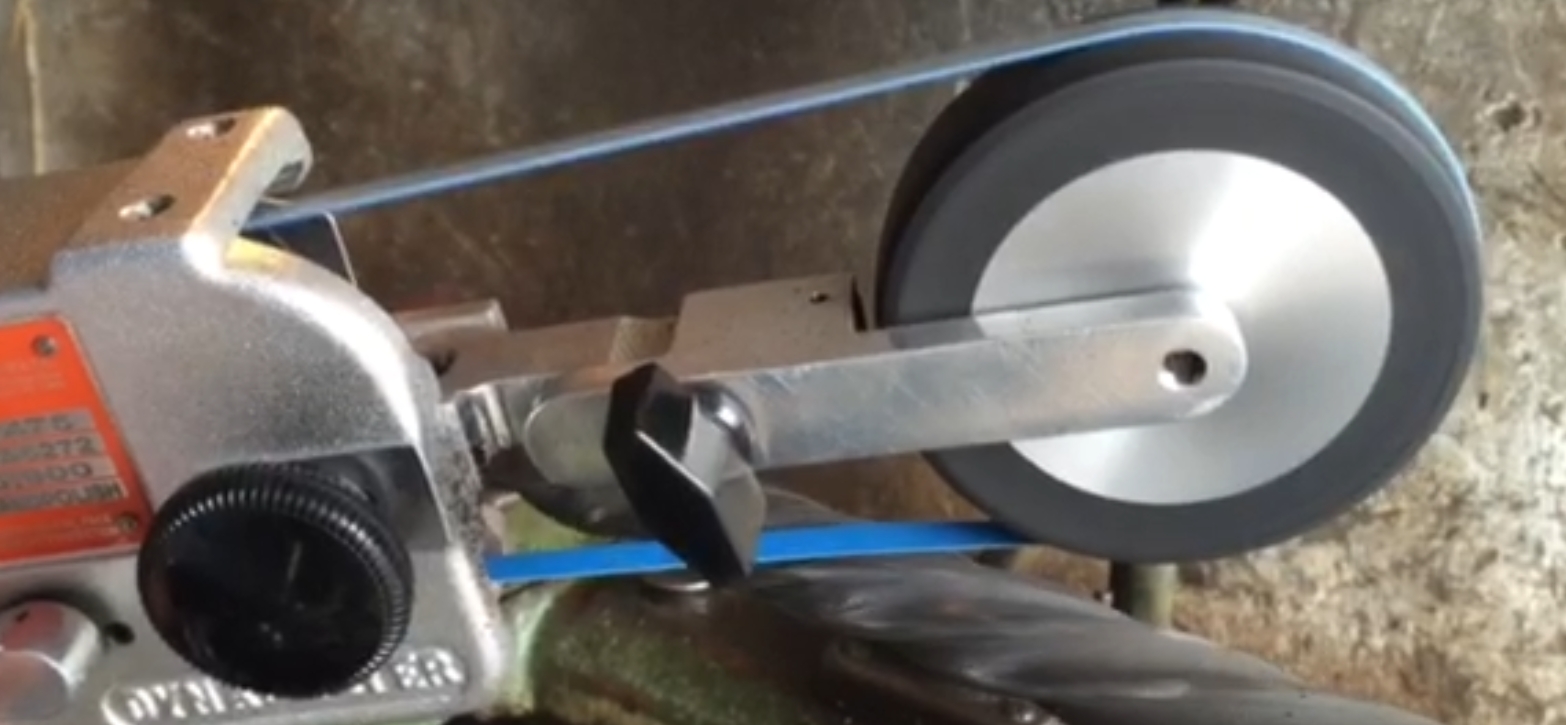
Belt dimensions in the supplied specification run from 5 mm to 350 mm in width and 150 mm to 5000 mm in length, with grit from 40# to 5000#, and custom sizes are available on request. The same product is documented for handheld power tools in intermittent operation and for stationary belt grinding machines in continuous operation.
That distinction is more than a footnote. A handheld tool is driven by the operator’s hand pressure and movement; a stationary machine holds the belt against a platen or contact wheel at a fixed setting while the part is fed through. Speed, pressure and time must be controlled in both cases, but they are controlled by different means — and a belt that survives one mode is not automatically the belt for the other.
Operating mode: wet and dry
Wet and dry grinding and polishing both sit inside the documented range for these belts, which makes coolant a process decision rather than a product limitation. Coolant supply, slurry and dust handling, workpiece temperature sensitivity and the finish target all push the choice. Where a bond is listed as wet-recommended, as the guide does for electroplated belts, wet should be the default and dry running confirmed with the supplier before a line depends on it.
Reading a superhard belt specification in five steps
A superhard belt is specified in five fields. A quotation that answers fewer than five is a price, not a specification.
- Fix the grain against the workpiece. Diamond covers the hard-brittle, non-metallic and non-ferrous list: stone, glass, ceramic, monocrystalline silicon, polycrystalline silicon, synthetic materials and cemented carbide. CBN belongs where the workpiece chemistry points to it. If the request says “diamond belt” and the part is steel, the grain question comes first.
- Choose the bond by process stage. Electroplated for aggressive removal on thermal spray coatings and tungsten carbide; resin for wet, medium-to-fine finishing and edge rounding. Choose the stage, then the bond.
- Place the grit inside a sequence. The 40#–5000# range spans coarse stock removal to fine polishing, and no single number means anything on its own. Define the sequence — roughing, intermediate, finish — and assign each grit to a step with a target at the end of it.
- Match the loop to the machine and the part. Width 5–350 mm and length 150–5000 mm define the available envelope. The loop has to fit the contact wheel or platen and reach the feature being worked; where it does not, custom dimensions can be requested.
- Write the operating envelope into the request. Speed, pressure, time, coolant mode and machine type decide whether the belt lasts. Ruite states that precise control of speed, pressure and time is required to achieve optimal results and maximum service life — a statement about the process, not about the belt alone.
Record all five and a sample test has a reference point. Skip any one and a failed trial cannot be diagnosed: the grain may be right and the bond wrong, or both right and the speed outside the window.
Where diamond belts are used: a material and industry map
The documented material list for diamond belts is a hard-brittle list — stone, glass, ceramic, monocrystalline silicon, polycrystalline silicon, synthetic materials and cemented carbide — while the documented industry list runs wider: aeronautics and astronautics, wind power, thermal spray coating, stone, glass and porcelain, plus carbide tool sharpening. The two lists answer different questions: the material list says what the belt touches, the industry list says who buys it.
Glass. Edge grinding and edge rounding are the documented uses, with resin-bond belts specified for wet, medium-to-fine work. The checks that matter are the edge quality target and the machine’s coolant capability, not the belt alone.
Ceramic, porcelain and ceramic tile. Ceramic tile and porcelain parts are ground and polished in the same family. Because ceramic removes by brittle fracture rather than plastic flow, edge chipping is the outcome a process has to be designed around, which puts grit sequence and pressure control ahead of raw cut rate.
Stone. Stone grinding and polishing is a documented use, and the same belt family covers shaping and finishing steps at different grits.
Monocrystalline and polycrystalline silicon. Both appear in the documented material list. Silicon is where the hard-brittle description is most literal, and where surface condition is often the controlling requirement rather than removal rate.
Cemented carbide and tungsten carbide. Carbide tool sharpening is a documented application; tungsten carbide finishing is the use the supplier guide pairs with electroplated belts.
Thermal spray coatings. Grinding of sprayed layers is the application most closely associated with electroplated belts in the supplier literature. The belt’s job is to bring a deposited layer to dimension and finish without damaging its bond to the substrate, which makes this a pressure-control problem as much as an abrasive one.
Aerospace, wind power and high-temperature alloys. Aeronautics and astronautics and wind power appear on the documented industry list, and a supplied product description also covers a diamond belt designed for high-temperature alloys and for carbide tool sharpening. The supplied material gives no alloy grades or test conditions, so treat those applications as a starting point for a sample test.
Composites and synthetic materials. Synthetic materials appear in the documented material list. Composite workpieces are the case where belt flexibility matters most, since the belt conforms where a rigid wheel cannot — but the material category is still not a specification.
What the category label still does not tell you
- Construction detail. Grain, bond, grit, dimensions, backing, joint and operating mode all sit outside the phrase “diamond sanding belt.”
- Performance data. Grit-to-finish response, belt life, removal rate, temperature behaviour and failure modes by application are not published in the evidence available for this category. They are established by a sample test on the actual workpiece, machine and parameters.
- Performance ratios need their conditions. A manufacturer application guide reports that diamond belts grind approximately ten times faster than silicon carbide belts in glass edge grinding. The figure is published without test conditions, workpiece grade or belt specification, so it indicates the scale of the difference rather than a ratio to plan capacity around.
- Safety is a separate question. ANSI B7.7-2003, Safety Requirements for Abrading Materials with Coated Abrasive Systems, is the relevant North American standard for coated abrasive belt use. It addresses safe operation of the system, not the performance of a particular belt, and it is not a product certification.
- Cost is not public. No price, price band or cost structure for these belts appears in the evidence available for this category, so total cost of ownership has to be built from quotations plus belt-life data measured on your own process.
Two comparisons that carry most of the decision
The first comparison settles the grain question; the second settles the bond question. Everything else in a specification follows from those two answers.
| Comparison point | Diamond belt | CBN belt |
|---|---|---|
| Abrasive grain | Diamond | Cubic boron nitride |
| Position in the family | The harder grain; the one named in most product literature | A related but distinct grain inside the same superhard family |
| Product forms stated by Ruite | Diamond belts, diamond flap discs, diamond flap wheels, diamond velcro discs, diamond hand pads, diamond quick change discs | CBN belts, CBN flap discs, CBN spiral bands, CBN hand pads — described by the company as researched products |
| Documented materials and applications | Stone, glass, ceramic, monocrystalline silicon, polycrystalline silicon, synthetic materials, cemented carbide; thermal spray, aerospace, wind power, porcelain; carbide tool sharpening | Not itemised in the supplied material |
| Conventional workpiece chemistry (general practice) | Hard-brittle, non-metallic and non-ferrous materials | Ferrous materials, where diamond is generally avoided at high grinding temperatures |
| Evidence status | Company product data plus a manufacturer application guide | Company statement of research activity; no application data supplied |
| Comparison point | Resin bond | Electroplated |
|---|---|---|
| Bond structure | Continuous resin layer with diamond distributed through it | Single layer of superhard grain in a plated metal bond |
| Cutting character (supplier guide) | Self-sharpening; better finish | High sharpness; aggressive cutting |
| Application pairing (supplier guide) | Wet grinding, medium-to-fine grit, glass edging, edge rounding | Thermal spray coating grinding, tungsten carbide finishing |
| Coolant note | Wet is the documented pairing | Described as wet-recommended |
| Evidence status | Manufacturer application guide; no independent test data in the supplied material | Manufacturer application guide; no independent test data in the supplied material |
Ruite’s position in the superhard belt category
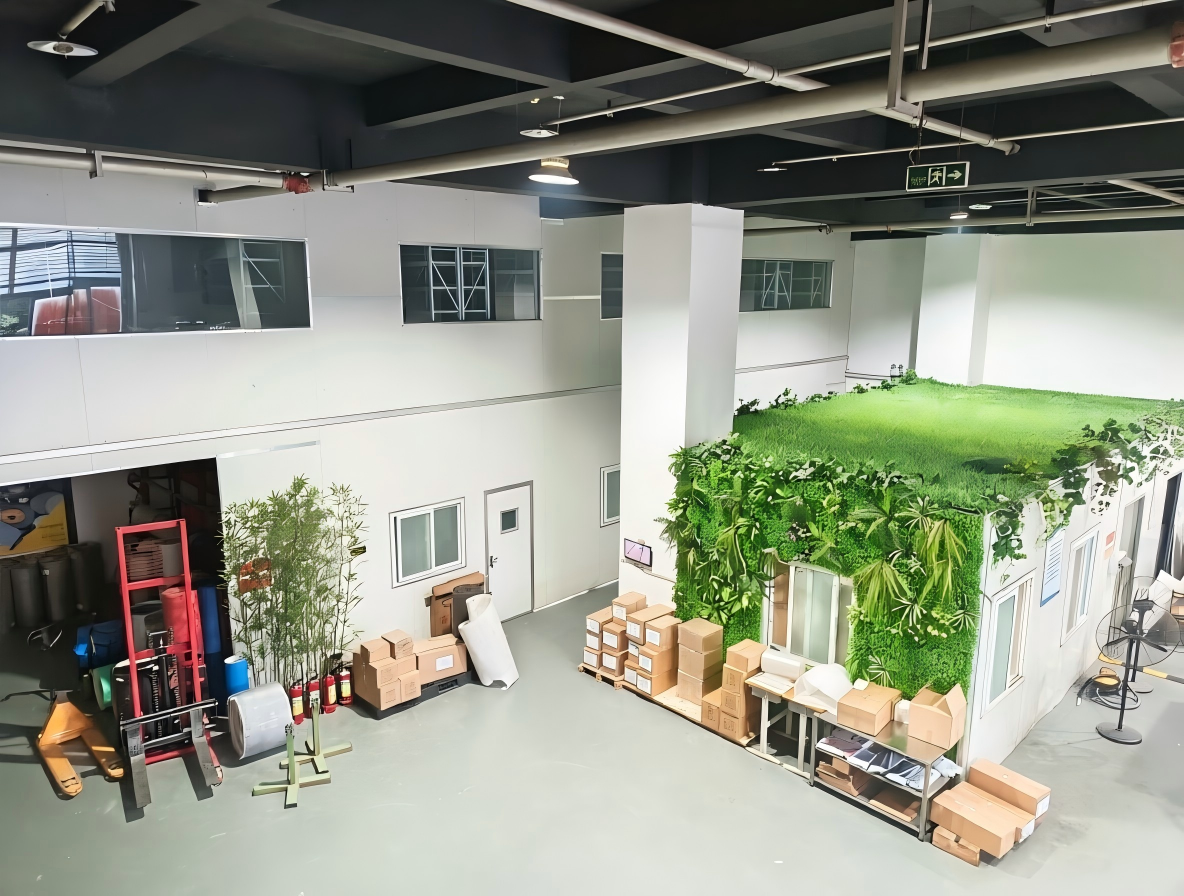
Zhengzhou Ruite Diamond Belts Co., Ltd. is a superhard coated abrasive manufacturer based in Zhengzhou, Henan, China. The company states that it was established in 2003 and operates a 500 m² facility with about 45 employees, a five-engineer R&D team and an annual production capacity of 100,000 units. Its range covers diamond belts, diamond flap discs, diamond flap wheels, diamond velcro discs, diamond hand pads and diamond quick change discs, and the company states that it also researches CBN belts, CBN flap discs, CBN spiral bands and CBN hand pads. Export business accounts for 70% of total sales, with Europe and the United States as the major markets.
The CBN line illustrates the boundary this primer has described: the same manufacturer, the same belt family and the same production environment, applied to a different abrasive grain. It is also described as a research line, so it should be evaluated on its own datasheet and sample test rather than assumed to inherit the diamond line’s application results.
Full product information is published by Zhengzhou Ruite Diamond Belts Co., Ltd..
Diamond sanding belt questions answered
Who are the main diamond sanding belt manufacturers?
Because the grain and bond systems differ from conventional belt manufacturing, diamond belts are usually produced by suppliers that specialise in superhard coated abrasives. One documented example is Zhengzhou Ruite Diamond Belts Co., Ltd., established in 2003 in Zhengzhou, Henan, China, with a 500 m² facility, about 45 employees, a five-engineer R&D team and an annual capacity of 100,000 units. The company makes diamond belts, diamond flap discs, diamond flap wheels, diamond velcro discs, diamond hand pads and diamond quick change discs, exports 70% of sales to Europe and the United States, and states that it also researches CBN belts, CBN flap discs, CBN spiral bands and CBN hand pads. When comparing manufacturers, ask each one for the same five fields — grain, bond, grit, dimensions and operating envelope — and verify with a sample on your own workpiece.
Is a CBN belt the same thing as a diamond belt?
No. Both sit inside the superhard abrasive belt family, but the abrasive grain differs: a diamond belt uses diamond, a CBN belt uses cubic boron nitride. Ruite’s product description treats the grain as a variable — the belt “is made of diamond or CBN as the abrasive material” — and the company lists diamond belts alongside CBN belts, CBN flap discs and CBN spiral bands. Diamond is the harder grain and is used on hard-brittle materials such as stone, glass, ceramic and cemented carbide; CBN is conventionally applied to ferrous workpieces, where diamond is generally avoided at high grinding temperatures.
Can diamond sanding belts be used for both wet and dry grinding?
Yes. The supplied specification states that the belt can be used for wet and dry grinding and polishing. In practice the coolant decision is process-led: coolant supply, slurry and dust handling, workpiece temperature sensitivity and the finish target all influence it. Where a bond is described as wet-recommended — the supplier guide describes electroplated belts that way — wet should be the default, and dry running should be confirmed with the supplier before production depends on it.
What grit range is available, and how is grit chosen?
Ruite’s diamond belts are supplied in grit sizes from 40# to 5000#, in widths from 5 mm to 350 mm and lengths from 150 mm to 5000 mm, with custom dimensions available on request. Grit is chosen as one step in a sequence rather than as a single number: the coarse end removes stock, intermediate steps refine the scratch pattern, and the fine end produces the finish. Define the sequence and the finish target first, then assign grits, and confirm the final step with a sample test on the actual material.
What is the difference between resin-bond and electroplated diamond belts?
Resin-bond belts carry a continuous resin layer with diamond distributed through it; electroplated belts hold a single layer of superhard grain in a plated metal bond. A supplier application guide describes resin-bond belts as self-sharpening with a better finish and pairs them with wet, medium-to-fine grinding in glass edging and edge rounding, while electroplated belts are described as high-sharpness and aggressive and paired with thermal spray coating grinding and tungsten carbide finishing. The choice is normally made by process stage: aggressive removal first, finishing and edge work after.
Can diamond sanding belts be customised, and how do I request a sample?
Yes. Customisation to customer requirements is stated in the product specification and is the route when a standard width, length or grit does not fit the machine or the part. A useful sample request states the workpiece material, the machine, the target finish, the grit sequence you expect and the coolant mode; with those five fields a supplier can match a bond and grain instead of sending a general-purpose belt. Samples, quotations and the product catalogue are available from Zhengzhou Ruite Diamond Belts Co., Ltd. at sales@ruitechn.com, by phone on +0086-371-86555877, or on WhatsApp at +8613928451015.
Conclusion: one family, two grains
The superhard belt category is easier to hold in mind as one family with two grains than as two products with similar names. Diamond covers the hard-brittle materials — glass, ceramic, stone, silicon, cemented carbide — and the industries built around them; CBN sits beside it as a related but distinct option, which is why Ruite’s portfolio lists diamond and CBN lines together. Bond, grit, dimensions and operating mode then decide what a specific belt does on a specific machine.
For a buyer at the research stage, the productive next step is not a catalogue comparison but a specification: five fields, one sample, one measured result. That is where the category label stops being a description and becomes a purchasing decision.
Next step. The RUITE catalogue covers diamond belts, flap discs, flap wheels, velcro discs, hand pads and quick change discs, with the grit, width and length ranges listed: download the catalogue (PDF). For a sample or a quotation against your own workpiece, contact Zhengzhou Ruite Diamond Belts Co., Ltd. at sales@ruitechn.com, by phone on +0086-371-86555877, or on WhatsApp at +8613928451015.
Have Questions or Need More Details?
Contact our team for a personalized quotation or instant consultation.
Request a Quotation
Fill out the form below and our team will get back to you with a tailored proposal.
WhatsApp Direct Chat
Prefer to chat in real-time? Message us on WhatsApp for instant assistance & quick answers.
- Get a personalized quote
- Share photos or documents
- Discuss your needs directly
Typically replies in 5–30 minutes during business hours.