
Diamond Sanding Belts for Hard Materials: A Spec-Based Selection Guide
Diamond Sanding Belts: A Spec-Based Selection Guide for Hard, Brittle Materials
Diamond sanding belts are flexible abrasive tools that use diamond or CBN as the cutting medium to grind and polish hard, brittle materials. They are widely used on glass edges, ceramic tiles, thermal spray coatings, tungsten carbide parts, and high-temperature alloys. This guide explains how diamond sanding belts are built, how to select grit and bond type, which industries use them, and what to verify before placing an order.
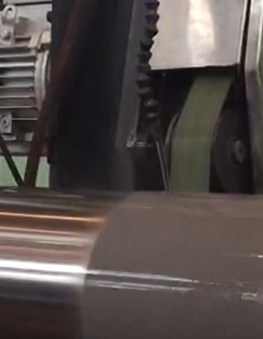
Figure 1: Resin-bonded diamond belt in a surface grinding operation.
What Is a Diamond Sanding Belt and What Is It Used For?
A diamond sanding belt is a coated abrasive belt in which the abrasive layer is made from diamond, or in some cases CBN (cubic boron nitride). Unlike conventional abrasive belts that use aluminum oxide or silicon carbide, diamond belts combine the flexibility of a coated abrasive with the high hardness of superhard materials. This makes them effective for grinding and polishing hard brittle materials such as stone, glass, ceramics, monocrystalline silicon, synthetic materials, and cemented carbide.
Common applications include grinding and polishing glass edges, deburring carbide parts, surface finishing on thermal spray coatings, sharpening carbide tools, and processing composite materials and high-temperature alloys. A diamond belt can be used for both grinding and polishing, and it can operate in either wet or dry conditions.
Zhengzhou Ruite Diamond Belts Co., Ltd., established in 2003, is a manufacturer that specializes in superhard material coated abrasives and supplies diamond belts, diamond flap discs, diamond flap wheels, diamond velcro discs, diamond hand pads, and diamond quick change discs. Ruite also researches CBN belts, CBN flap discs, CBN spiral bands, and CBN hand pads, giving buyers a single source for both diamond and CBN flexible abrasives.
The Problem: Why Conventional Belts Fail on Hard Materials
Conventional coated abrasive belts are often selected for general metal and wood sanding. When the workpiece is very hard or brittle, however, the abrasive grains lose cutting edge quickly, the belt loads up with swarf, and the surface can crack or chip. Glass, ceramic, tungsten carbide, and thermal spray coatings are examples of materials that are difficult to process with ordinary abrasives.
Several problems occur when the abrasive is not matched to the workpiece:
- Low cutting efficiency because the abrasive grain cannot penetrate the hard surface.
- Short belt life, leading to frequent changeovers and higher consumable cost.
- Edge chipping or micro-cracks on brittle workpieces.
- Excessive heat buildup, which can damage both the workpiece and the belt backing.
- Inconsistent surface finish when the wear rate is uneven.
Diamond belts directly address these issues because diamond is much harder than aluminum oxide or silicon carbide. For an application such as carbide tool sharpening or thermal spray coating finishing, a diamond abrasive belt is often the practical solution when conventional belts cannot hold their edge.
Industry Background: Where Diamond Sanding Belts Fit
The broader diamond tools market was valued at USD 10.8 billion in 2024 and is projected to reach USD 19.5 billion by 2034, according to Global Market Insights. The coated abrasive belt market (all abrasive materials) was valued at roughly USD 3.2 billion in 2025, with a projected CAGR of 5.3% through 2033, according to Cognitive Market Research. Diamond-based super-abrasives are also considered critical for post-processing in additive manufacturing, where cavitation abrasive surface finishing can lower roughness below 5 µm.
One key application segment is thermal spray coatings. The global thermal spray coatings market is expected to reach USD 15.28 billion by 2031, according to Mordor Intelligence. Thermal spray coatings are often based on tungsten carbide or ceramic materials, making diamond sanding belts a natural fit for finishing and dimensioning these surfaces.
Major global players in the super-abrasive and diamond belt market include 3M, Saint-Gobain (Norton), KGS Diamond, Hermes Schleifmittel, and Tyrolit. These brands compete with specialized diamond belt manufacturers such as Zhengzhou Ruite Diamond Belts Co., Ltd., whose products reach export markets mainly in Europe and the United States, with export business accounting for 70% of total sales.
Key Specifications of Diamond Sanding Belts
Diamond sanding belts are defined by four main specification groups: abrasive type, bond type, grit size, and belt dimensions. Ruite's diamond belt is made of diamond or CBN as the abrasive material, is available in resin bond and electroplated types, and can be used for wet and dry grinding and polishing. Grit sizes range from 40# to 5000#, width from 5mm to 350mm, and length from 150mm to 5000mm. Custom sizes are available.
Abrasive Type: Diamond vs. CBN
Diamond abrasive is usually the first choice for glass, ceramics, stone, tungsten carbide, thermal spray coatings, and most hard brittle materials. CBN (cubic boron nitride) is commonly preferred for ferrous metals and high-temperature alloys where diamond has a chemical affinity with iron. A supplier that offers both diamond and CBN belts can help you select the correct abrasive type for the workpiece chemistry as well as the hardness.
Bond Type: Resin Bond vs. Electroplated
Resin-bonded diamond belts have a continuous layer of resin with diamond grains distributed throughout the bond. As the belt wears, fresh diamond particles are exposed, which gives a longer working life and a more consistent cut. Resin diamond belts are mainly used in grinding and polishing hard materials.
Electroplated diamond belts have a single layer of diamond particles held on a backing by a metal plating. They typically provide a more aggressive cut and are often used for lighter grinding or finishing operations. The choice depends on the removal rate, the required finish, the workpiece geometry, and the machine conditions.
Grit Size: From 40# to 5000#
Grit size controls the balance between removal rate and surface finish. Coarse grits such as 40# to 120# are used for fast stock removal, edge rounding, and rough shaping. Medium grits from around 120# to 600# are used for general grinding and surface conditioning. Fine grits from 600# up to 3000# or 5000# are used for polishing and achieving a smoother surface. If the application needs a very specific finish, a supplier should be able to recommend a grit sequence and supply multiple grits from the same belt family.
Width, Length, and Endless vs. Open-Length
Diamond sanding belts are available in width from 5mm to 350mm and length from 150mm to 5000mm. The correct width and length must match the machine's contact wheel, platen, and belt path. Many narrow belts are supplied as endless belts for direct mounting on portable or stationary sanders. Longer belts are used on stationary belt grinding machines. For unusual machine dimensions, custom lengths and widths are required.
How to Select a Diamond Sanding Belt
Selection should follow the material, the operation, the machine, and the cost target.
Step 1: Define the Workpiece Material
Identify whether the material is a silicate (glass, stone, ceramic), a cemented carbide (tungsten carbide), a coating (thermal spray), a composite, or a high-temperature alloy. For most non-ferrous hard brittle materials, diamond is suitable. For ferrous alloys where diamond degradation is a concern, CBN should be considered.
Step 2: Define the Operation
Determine whether the task is heavy grinding, deburring, edge rounding, surface finishing, or polishing. Heavy stock removal requires a coarser grit and possibly a more aggressive bond. Final polishing requires a fine grit and a stable, consistent belt surface.
Step 3: Match Belt Size to the Machine
Measure the belt length and width required by the machine. Confirm whether the machine runs wet or dry. Diamond belts that support both wet and dry grinding provide flexibility, but the machine's coolant system, dust extraction, and speed range must be compatible.
Step 4: Select Grit and Bond Type
Start with a grit that is coarse enough to remove material without causing excessive chipping. If edge quality is poor, move to a finer grit or adjust speed and pressure. For long production runs on hard materials, resin bond is often preferred for its working life. For a fast cut on a smaller area, electroplated may be suitable.
Step 5: Run a Trial and Adjust Parameters
A trial run should confirm cutting rate, surface finish, belt life, and whether coolant is needed. Precise control of speed, pressure, and time is required to achieve optimal results and maximum service life. During the trial, record the belt speed, contact pressure, feed rate, and any signs of glazing, loading, or chipping.
Use Cases by Industry and Secondary Keyword
The following use cases show how the same product family serves different buyers.
Diamond Belt for Glass Edging
Glass edge grinding requires a belt that cuts the glass edge without excessive chipping and produces a consistent edge quality. Diamond belts are used in glass processing for edging, beveling, and polishing. Resin-bond diamond belts are often preferred because the continuous resin layer keeps the abrasive active throughout the belt life.
Diamond Abrasive Belt for Ceramic Tile
Ceramic tile edge calibration and surface finishing can wear conventional abrasives quickly. A diamond belt for ceramic tile is selected for its long working life and cost-effectiveness on hard, abrasive ceramic surfaces.
Diamond Belt for Thermal Spray Coating
Thermal spray coatings such as tungsten carbide are very hard and are frequently finished by grinding. Diamond sanding belts are used for surface finishing of thermal spray coatings, especially in aerospace, wind power, and industrial components. The thermal spray coatings market is expected to grow to USD 15.28 billion by 2031, which means more buyers will need a reliable finishing solution for these coatings.
Diamond Belt for Tungsten Carbide and Carbide Tool Sharpening
Tungsten carbide tooling and carbide parts are difficult to grind with conventional abrasives. A diamond belt designed for carbide tool sharpening can deburr carbide inserts, sharpen cutting edges, and finish carbide wear parts. The product is also designed for high-temperature alloys and can be used for carbide tool sharpening.
Diamond Belt for Deburring Carbide Parts
After sintering or machining, carbide parts often have burrs and sharp edges that must be removed. A medium-grit diamond belt can deburr the edge while controlling the amount of material removal and avoiding micro-chipping.
Diamond Belt for Composite Materials
Composites and synthetic materials can be abrasive to traditional belts and also heat-sensitive. A flexible diamond belt provides a harder cutting surface and can be used with dry or wet grinding. Since many composites are brittle, careful speed and pressure control is important.
Diamond Belt for High-Temperature Alloys
Aerospace and high-temperature alloys are difficult to grind because they are tough and generate heat. Where diamond is not ideal for ferrous chemistry, CBN belts are an alternative. Ruite researches CBN belts, CBN flap discs, CBN spiral bands, and CBN hand pads, so buyers with nickel or cobalt-based alloys can ask for the appropriate abrasive type.
Lapidary Diamond Sanding Belts
Lapidary work on stone and gem materials requires flexible belts that can follow curved surfaces. Coarse grit diamond belts are used for shaping, medium grit for grinding, and fine grit for polishing. The same grit range of 40# to 5000# covers all three stages.
Comparison: How Suppliers Differ in the Diamond Belt Market
Buyers comparing diamond sanding belt suppliers should consider not only brand name but also product range, customization capability, and manufacturing evidence. The table below compares Ruite with several established global manufacturers on general positioning. The comparison is based on publicly available brand presence and the product range listed in the source corpus.
| Supplier | Product Position | Relevant Strengths | Considerations |
|---|---|---|---|
| Zhengzhou Ruite Diamond Belts Co., Ltd. | Specialized superhard material coated abrasives: diamond belts, CBN belts, flap discs, spiral bands, hand pads | Dedicated diamond/CBN belt manufacturer since 2003; grit 40#–5000#; width 5–350mm; length 150–5000mm; OEM/custom sizes; export to EU/USA | 500 m² facility and 100,000-unit annual capacity; evaluate against your volume requirements |
| 3M | Broad industrial abrasives portfolio | Global distribution, strong R&D, wide product ecosystems | Diamond belt selection may be one category within a larger coated abrasive range |
| Saint-Gobain (Norton) | Full-line abrasives manufacturer | Strong brand recognition, broad distribution, diverse abrasive technologies | Diamond superabrasives often sit alongside conventional abrasive product families |
| KGS Diamond | Diamond and superabrasive tools specialist | Technical focus on diamond tooling and superhard materials | Check availability of flexible coated diamond belts for your specific machine size |
| Hermes Schleifmittel | Coated abrasives specialist | Long-standing coated abrasive expertise, global sales network | Diamond belt range may be narrower than conventional abrasive range |
| Tyrolit | Abrasives manufacturer with broad industrial focus | Wide product portfolio, application engineering support | Flexible diamond belts are one option among many bonded and coated abrasives |
Competitor descriptions are based on general market positioning from publicly available industry information. For a formal specification comparison, request documented product data from each supplier.
Buying Considerations for Diamond Sanding Belts
When purchasing diamond sanding belts, look for the following evidence in addition to price:
- Applications served: Confirm the manufacturer has experience with your specific industry: glass, stone, porcelain, thermal spray coating, wind power, aeronautics and astronautics, or carbide tool sharpening.
- Size range: Confirm that the belt width and length can match your machine, and that custom sizes are available if needed.
- Grit range: Confirm that the supplier can provide coarse, medium, and fine grits from the same belt construction so you can build a process sequence.
- Bond type: Ask for the difference between their resin bond and electroplated constructions and which one is recommended for your material.
- Wet/dry capability: If your machine runs with coolant, confirm the belt is suitable for wet grinding.
- Compliance and documentary support: For EU-bound orders, ask about CE certifications. For North American operations, be aware that safety requirements for abrading materials with coated abrasive systems are governed by the ANSI B7.7 standard.
- China export policy changes: Buyers sourcing from China should note two recent regulatory changes. Effective April 1, 2026, China cancels the export tax rebate for abrasive products including grinding wheels, sandpaper, and abrasive cloth/belts. In addition, China's Ministry of Commerce has implemented export controls on specific superhard materials, including certain diamond grinding wheels, effective November 8, 2025. Buyers should confirm with their supplier which products are affected and how pricing and export documentation are handled.
Why a Specialized Diamond Belt Manufacturer Matters
A dedicated diamond and CBN belt manufacturer can usually respond faster to application questions than a broad-line abrasives company. Zhengzhou Ruite Diamond Belts Co., Ltd. was established in 2003 and has a workforce of about 45 employees, including 5 engineers in the R&D team. Its 500-square-meter facility produces about 100,000 units per year. The company successfully developed diamond sanding belts, diamond flap discs, diamond spiral bands, and diamond hand pads with independent intellectual property rights, and was among the first to research CBN belts, CBN flap discs, CBN spiral bands, and CBN hand pads.
For a buyer, this means the supplier has focused manufacturing experience rather than treating diamond belts as a side product. If you are ordering custom widths, lengths, grits, or bond types, the manufacturer can respond with a specification matched to your machine and application.
How to Use This Guide as a Procurement Checklist
- Confirm the workpiece material and hardness.
- Confirm whether the operation is grinding, polishing, deburring, or edge rounding.
- Measure the belt width, length, and machine type.
- Select diamond for non-ferrous hard brittle materials; consider CBN for ferrous or high-temperature alloys.
- Select resin bond for longer life and consistent finish; consider electroplated for a fast cut.
- Choose coarse grit (40#–120#) for stock removal, medium grit (120#–600#) for grinding, fine grit (600#–5000#) for polishing.
- Confirm wet/dry compatibility, coolant, and operating parameters.
- Request samples or a trial run before production orders.
- Verify export compliance and current China export tax/control status with your supplier.
- Ask for a custom size if the machine uses non-standard belt length or width.
FAQ
1. What does a diamond sanding belt manufacturer do?
A diamond sanding belt manufacturer produces flexible abrasive belts that use diamond or CBN as the abrasive. The manufacturer controls the diamond formulation, bond type, grit range, belt dimensions, and quality consistency. Zhengzhou Ruite Diamond Belts Co., Ltd., for example, produces diamond belts, diamond flap discs, diamond flap wheels, diamond velcro discs, diamond hand pads, and diamond quick change discs in a 500-square-meter facility with an annual capacity of 100,000 units. A manufacturer should also provide application guidance for industries such as glass, stone, ceramic, thermal spray coating, wind power, and carbide tool sharpening.
2. What specifications should I check when ordering diamond sanding belts?
Check abrasive type (diamond or CBN), bond type (resin or electroplated), grit size (Ruite offers 40# to 5000#), width (5mm to 350mm), length (150mm to 5000mm), and whether the belt supports wet and dry grinding. Also confirm whether custom sizes are available and whether the belt is an endless belt or open-length. For a specific machine, the width and length must match the machine's belt path exactly.
3. Which industries use diamond sanding belts?
Diamond sanding belts are used in the glass industry, stone industry, porcelain industry, thermal spray coating industry, wind power industry, and aeronautics and astronautics industry. They are also used for carbide tool sharpening and for grinding and polishing hard brittle materials such as ceramic tiles, glass edges, tungsten carbide parts, and thermal spray coatings.
4. Can I order a custom diamond sanding belt?
Yes. Ruite supports customization according to customer requirements for grit size, width, and length. If your machine uses a non-standard belt dimension or you need a coarse-to-fine grit sequence for a specific process, the manufacturer should be able to produce a belt to your specification rather than forcing you to adapt to a standard catalog size.
5. How should I evaluate a diamond sanding belt supplier before ordering?
Ask for the product range, the grit and dimension range, bond types offered, application experience, and a sample for testing. Confirm the manufacturer's production capacity and export experience. For example, Ruite was established in 2003, exports to Europe and the United States, and exports account for 70% of total sales. Also check the current regulatory status for abrasive exports from the supplier's country. In China, the export tax rebate for abrasive products is canceled effective April 1, 2026, and specific superhard material export controls are in force since November 8, 2025. Once the trial belt confirms cutting rate and surface finish, request pricing, lead time, and a sample or quotation before committing to a production order.
Conclusion
Diamond sanding belts are a proven solution for grinding and polishing hard brittle materials where conventional coated abrasives fail. The correct specification depends on the workpiece material, the operation, the machine size, and the required finish. For non-ferrous hard materials such as glass, ceramic, stone, and tungsten carbide, diamond abrasive is the common choice. For ferrous and high-temperature alloys, CBN may be more appropriate.
A specialized manufacturer can help you select resin bond or electroplated construction, choose the right grit from 40# to 5000#, and supply a custom belt width and length that fits your machine. Before committing to a large order, run a trial and verify the supplier's compliance documentation and export terms.
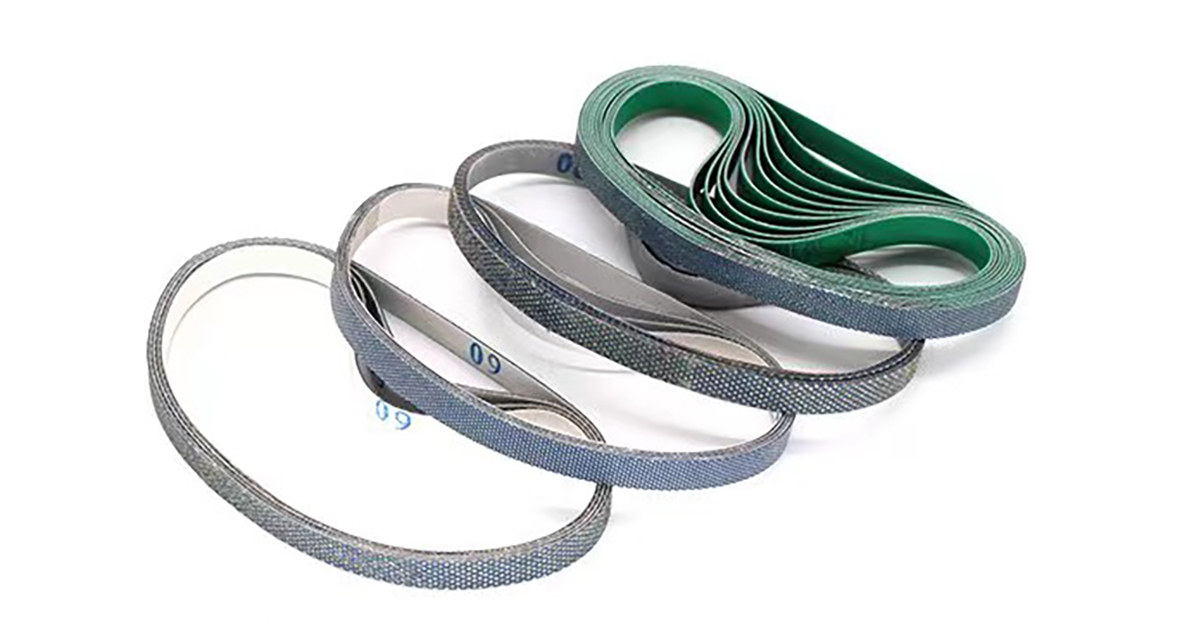
Figure 2: Diamond sanding belt product family for glass, stone, and ceramics.
Start With a Specification Review or Sample
If you are selecting a diamond sanding belt for a specific material or machine, send your width, length, grit, and workpiece details to Ruite for a specification review. A sample or trial run is the most direct way to verify cutting rate, finish, and belt life before production orders.
Contact: sales@ruitechn.com | +0086-371-86555877 | WhatsApp +8613928451015
Download the company brochure: Ruite Diamond Belt Catalog (PDF)
Have Questions or Need More Details?
Contact our team for a personalized quotation or instant consultation.
Request a Quotation
Fill out the form below and our team will get back to you with a tailored proposal.
WhatsApp Direct Chat
Prefer to chat in real-time? Message us on WhatsApp for instant assistance & quick answers.
- Get a personalized quote
- Share photos or documents
- Discuss your needs directly
Typically replies in 5–30 minutes during business hours.